— Anand Kumar —
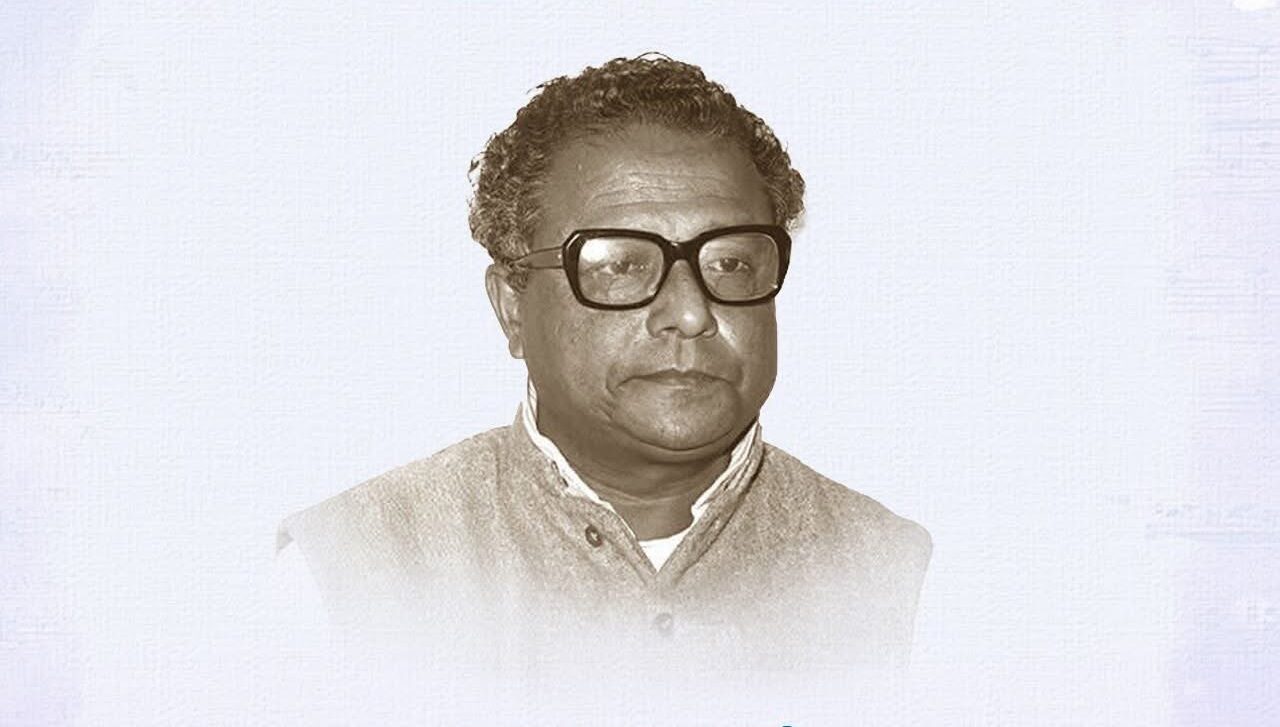
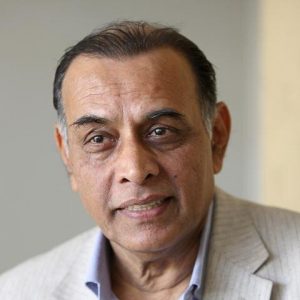
Golap Borbora (1925 – 2006) was one of the leading lights of the Indian socialist movement. He was a close associate of Dr. Rammanohar Lohia and Jaiprakash Narayan. He was a member of the national executive of the Socialist Party from 1956. He was associated with Dr. Lohia in the editorial board of socialist monthly Mankind. His contribution in promoting identity and interests of the north-eastern region is ever inspiring. He worked all his life for the aspirations of the weaker sections. His admirers remember him for his courage of conviction in pluralistic nationalism. He equated integrating of the North-eastern region with promoting development through democratic ways. He went to jail 9 times including the entire period of the Emergency Raj ( 1975 – ’77). He was respected across the party lines as he lived a life of simplicity and honesty. Remembered as a self-less socialist reformer, he belonged to the handful group of well-educated youth leaders who were attracted to the freedom movement during the Quit India Movement and after freedom chose the path of building a socialist society through power to the people.
His illustrious socialist contemporaries included Madhu Limaye ( eminent parliamentarian), Raj Narain ( the socialist leader remembered for defeating the prime minister Indira Gandhi in 1977), Dinesh Dasgupta ( a socialist who spent a life-term in the Andaman Jail), Rangnath ( founder general secretary, Socialist Party), Goude Murahari ( Deputy speaker, Rajya Sabha), Madhu Dandavate ( union finance minister), Rabi Ray ( Speaker, Lok Sabha), George Fernandes ( Socialist trade union leader), Kishen Pattanayak (Editor, Mankind) and Rishang Keishing ( first Naga member of Lok Sabha ). Born in Golaghat, Golap Borbora received school education in Tinsukia and higher education from Calcutta University. He began his public life in the north-eastern region of the newly independent nation as a trade union leader under the banner of Hind Mazdoor Sabha, established by Jaipakash Narayan in 1948. He was president of the Socialist Party in Assam and became ‘voice of the voiceless’ in the Indian parliament where he was elected to the Rajya Sabha between 1968 and 1974. He was a member of Assam Vidhan Sabha from 1978 to 1983. He was the first non-Congress chief minister of Assam. He was also president of Janata Party in Assam, which was born in 1977 to bring together all democratic non-Congress parties under the guidance of Jaiprakash Narayan to defeat the authoritarianism of the Emergency Raj.
Golap Borbora became known in the socialist movement of India in between 1958 and 1963 when he accompanied eminent socialist leader Dr. Rammanohar Lohia to defy the continuity of colonial restrictions upon the rest of India about entering the N.E.F.A. ( North Eastern Frontier Agency) area. The Socialists were critical of the ‘benevolent’ bureaucratic approach and offered an alternative democratic strategy for meeting the aspirations of the north – eastern people in harmony with the imperatives of national unity. They opposed the denial of the Constitutional right for elected representation in the Panchayats and the parliament. They urged for holistic initiatives by the government to promote development through increased interaction between the people of the north-east and the rest of India.
The Lohia Line
It is true that mostly the problems of the north-eastern region of India are defined around ‘the Naga problem’ or the clashes between ‘separatist’ ‘underground’ ethnic organisations and the Indian armed forces. But the socialists, particularly Dr. Rammanohar Lohia analysed it in the context of the India – China relations and the security of the northern borders. The government policies maintained isolation. The socialists argued for decolonization through introduction of modern processes like elected representation as well as maintaining the community identities within the post-colonial constitutional framework.
According to Dr. Lohia,”I am definitely of the opinion that the Scheduled Tribes of URVASIAM are victims of great poverty and greater ignorance arising out of the government policy of isolation…”. He asserted that ‘economic, material and moral progress’ of URVASIAM through modernization is the responsibility of the Indian nation. He further underlined that modernization did not mean ‘imitation of European or any other ways’ but ‘adoption of the ways that were most intelligent in the given circumstances.’ ( Lohia, R. (1963) India, China and Northern Frontiers (Hyderabad, Navhind Prakashan) pp. 85-89.
Dr. Lohia was the first non-ruling party leader to have visited the north-eastern region and offered a comprehensive scheme about the aspirations and needs of the region with emphasis upon national security in the context of changing China. The Lohia plan, presented in 1959, had 6 dimensions – 1) Ending the inequalities between the administrators and the people. 2) Meeting the communist challenge of encouraging the insurrectionary strategies. 3) Avoiding the short term view of Chinese incursions in the north-eastern region by accepting the McMahon Line as the border between India and the sovereign Tibet (which was under the Chinese occupation) and taking a long term view as the India – China border must be defined by the eastward course of the Brahmaputra river, including the Kailash-Mansarovar pilgrimage. 4)The castes’ ridden Hindus are no match for saving the country from continuous Chinese infiltrations. 5) Ending ‘disinterestedness’ prevalent among the people through promoting identification between the ruling classes and the masses. and 6) Creation of a Himalayan state from Ladakh to URVASIAM, or two states with option of Nepal joining it – a state in whose development there is cooperation of the whole country.
The Lohia plan was further elaborated by presenting several ‘uncontroversial suggestions’ after his third visit in 1963. It included establishing fraternal relations between the villages of URVASIAM and villages or city-wards of the rest of the country, small and austere administration, free play of ideas, a social reforms program, and rejecting the ‘stupid’ classification like Aryan and Mongolian.
The national executive committee of the Socialist Party had underlined ‘the lack of a positive government policy’ in one of its first meetings held from 2nd to 4th March in 1956. Then there was government refusal to ‘permit’ Dr. Lohia and Golap Borbora to visit the NEFA area on 20th November, 1958. It mals’ (15 -19 July, 1959). The national executive committee of the socialists was concerned about the Naga problem due to unfortunate togetherness of ‘arrogance on the part of the administration’ and ‘anger on the part of the Nagas’ (23-25 October, 1959). The socialists attempt to decolonize the identity of the north-eastern region included re-naming it URVASIAM ( Uttar Purva Simant Anchal) replacing the colonial label NEFA (North Eastern Frontier Agency) was followed by two more resolutions in 1959 criticising the government for its ‘Barbarous atrocities’ in Urvasiam and keeping the people as ‘protected aniand giving a new historical depth by underlining the traditional belief that Rukmini belonged to Mismi community, and plan for horticultural development of the Himalayan region covering an area of 1000 miles. They found it ‘astonishing’ and ‘scandalous’ that URVASIAM should be under the Foreign Ministry. They opposed the reorganization of the north-eastern area in 1968 and rejected the idea of ‘North Eastern Development Council’ as detrimental to democratization.
Golap Borbora represented the socialist discourse consistently from 1958 till his last days of active public service. He was a visionary who persistently followed the path of democratic nation-building through peaceful ways in a setting dominated by ‘benevolent bureaucrats’, the Chinese designs and ‘angry ethnic communities’. His historic letter published in Assam Tribune ( ‘Wither Nagaland’; December 8, 1963) is an excellent summary of the socialist orientation. It openly criticises the prime minister Nehru for continuing the 1873 Colonial policy of ‘isolation from the rest of India’ and ‘the inner line permit system’ even after the Chinese invasion in 1962. It blames the bureaucracy for being against modernism – ‘By keeping the south door closed up till now, we have kept the northern doors open for Chinese aggression.’.
It argued in favour of the elected representation in the Panchayats and the parliament and district-based governance in line with the socialist concept of ‘four pillar state’. It emphasised the need to address the causes of alienation of the north eastern people and the region which is bigger than West Bengal, with 4 percent of the Indian population and 8 percent of the Indian territory. It has proved to be a lasting declaration in support of the expectations of the marginalised millions. It was an open declaration in support of the marginal communities who were struggling for political justice and socio-economic transformations since independence. If a) isolation, b) bureaucratization, and c) centralization were the distinct features of the government policy, Golap Borbora led socialists were urging for i) integration, ii) democratisation, and iii) decentralization. They were asking for such policies which will encourage unity and ensure ‘identity’.
This fascinating (and nearly forgotten) narrative of the socialist efforts under the leadership of Dr. Lohia and others to contribute in the modernization, democratization and integration of the restive north-eastern people is included as a section titled ‘Urvasiam’ in Lohia’s India,China and Northern Frontiers (1963) ( Hyderabad, Navhind Publications; pp 82 -104). The socialists asserted their disagreements with the Nehru – Verrier Elwin approach of segmentation and separation of the north-eastern communities and insisted on participatory development of the north-eastern region. It is heartening that this thrust was maintained under the leadership of Golap Borbora beyond Lohia as evident from the resolution of the Samyukta Socialist Party (1968), the speeches of Shri Borbora in Rajya Sabha (between 1968 and 1974) and the orientation of the first non-Congress government of Assam (1978-79).
It is true that when the people of India were able to win freedom from British rule, they were confronted with the challenge of democratic nation-building. It contained three imperatives – 1. De-colonization, 2. Development, and 3. Democratization. They developed a road map in the form of a Constitution with deep faith in the dynamics of democracy and integrative potential of developmental planning. It helped in the progressive integration of a diverse people suffering with chronic poverty, communal divides and entrenched illiteracy. But the north-eastern region remained isolated and marginalised due to the continuity of the 1873 colonial system created for promoting the alien rule.
The Indians, including the citizens of the north eastern region, were the most baffling example of diversities – with all the religions in the world, thousands of castes, scores of languages spoken by millions of people, economic inequalities, and a large population spread between the continent-like length and breadth between the Himalayas and coastal regions of Kerala, including more than 550 princely states. It was no consolation that there were only two princely states in the north eastern region – Manipur and Tripura. There was prominence of ‘fissiparous’ tendencies and growing appeal of ‘separatism’. But there was a strong desire to protect the hard-earned freedom at any cost. It helped in overcoming the waves of disintegration despite the failure to prevent separation of Muslim majority provinces in the north-west and eastern regions to create two nation-states (India and Pakistan) out of a common Indic civilization. But there was a side-effect of the Indian experiment of democratic nation-building in the north-eastern region.
It caused ‘peripheralization’ of north-eastern India. It postponed the process of democratisation. The gap between the people of the north-eastern region and the rest of India further increased after the Chinese aggression of 1962 and continuous negative inputs from the Chinese side. It will be a fitting tribute to Shri Golap Borbora in the centenary year if the policy makers and the people of India join hands with the people of the north-eastern region spread over seven sister states and rest of the country join hands to make up for the missed opportunities and pursue the vision of Golap Borbora and his generation for furthering decolonization, sustainable development and participatory democratization in harmony with the imperatives of identity and unity.
######
( Special note – I am thankful to Shri Abhinav Borbora for providing rare reference material which proved invaluable in the making of this tribute to Shri Golap Borbora. AK )
Discover more from समता मार्ग
Subscribe to get the latest posts sent to your email.