— MOHAN GURUSWAMY —
India has taken delivery of its Rafale fighters paying Rs 1600 crores for each of these jets. When the deal was negotiated first in 2013 it was for 126 Rafales including 90 to be manufactured in India for about Rs.560 crores apiece. It is pretty much the same fighter we are now buying for almost thrice as much. Therein lies a murky tale that will unravel, sooner or later.
India spends almost 1.9% of GDP and almost 13% of the Central Governments budget on Defence. Capital expenditure accounts for about a quarter of this budget. This is a juicy Rs. 90,000 crores. One must also understand that a good part of the revenue expenditure also relates to institutional bulk purchases annually on things like rations and clothing.
Considering that India’s military has over a one and a half million personnel this big-ticket “revenue expenditure” alone totes up to quite a huge sum each year. From 2011 to 2016, India expended spend a sum in excess of Rs.300,000 crores on capital expenditure. This is a lot of money by any standards. At present India spends almost 70% of its capital expenditure on imports. India’s import dependence is well known, as are its reasons and it is unlikely to change soon. It is also cause for many sniggers in the international strategic community on India’s pretensions of being a major power.
Its not that India is incapable of indigenizing, but for that to happen it must be willing to make do with what is possible and its armed forces must not insist on state of the art weapons systems right away.
That is at the crux of this problem. It is not infrequently that our top brass will simply say if the service cannot have a particular weapons system it cannot guarantee the outcome of a conflict. Often this argument is just a fig leaf to obscure other intentions. Thus many programs to develop indigenous main weapons like fighter aircraft and tanks have fallen by the wayside.
The Light Combat Aircraft development is a case in instance. The IAF did everything possible to stall the project by changing requirements and delaying approvals at various stages. The DRDO must also share a good part of the blame for this as it has a habit of over promising and being unable to deliver on time, or often at all.
Sometimes the DRDO just bluffs. When the Indian Navy asked the DRDO point blank whether the Trishul surface to air missile to defend ships against sea-skimming missiles was tested and ready for induction, the answer was affirmative. The truth was that the Trishul was a failure and its promises a sham. The IN had to then hastily acquire the Israeli Barak for which a pound of flesh was carved out of its tight budget. It was for his role in this purchase that RK Jain, Treasurer of the Samata Party headed by India’s then defence Minister, George Fernandes, was arrested and charged by the CBI.
The corruption that blights the domestic arms industry is well known. One former Chairman of the Indian Ordnance Factories Board is currently being prosecuted for corruption. A former Chairman of BEML had come under the CBI’s scanner as fallout of the Tatra affair. Defence has traditionally been a sacred cow and it is not often that the endemic malfeasance that envelops it spills out into the open.
Interestingly the first major aircraft procurement of the IAF was when it requested HAL to recondition US B-24 bombers left behind at Kanpur. By 1948 the IAF had two squadrons of B-24 Liberator heavy bombers. That probably was the first and last time defence procurement took place without a hint of scandal about it. In November 1948 India ordered the de Havilland Vampire jet fighter and before the program ended 400 were imported or built in India. This was India’s first major weapons acquisition. VK Krishna Menon, India’s first High Commissioner in London, engineered this deal. At that time India had UK Sterling reserves and the cost of the Vampires was just deducted from this. In those days of early innocence this deal escaped notice. Here was a relatively large arms purchase made on the quiet and with no options examined.
But the Menon hand did not remain obscured for long, for he was caught out trying to engineer another deal in 1948– for Jeeps. Menon entered a contract with an English firm for the supply of vehicles for Rs.80 lakhs – a huge sum those days. There was huge hullabaloo in Parliament and committee headed by the Speaker, Ananthsayanam Aiyangar, recommended an inquiry. This suggestion was never followed up upon, and quietly dropped when Menon was inducted into the cabinet in 1955.
Other major deals followed in quick succession, without any of the procedures that are standard now. India now wanted to diversify sources. There were good reasons for it. The IAF discovered that the British made Vampires were supplied without firing pins and could not be used in J&K. We apparently did not learn any lessons from this, for in 1999 the Government learned that the first lot of Su-30 MKI’s based in Pune, did not have any weapons hard-points.
Following the Vampires India ordered several hundred Ouragan’s and Mystere fighters from France, Fairchild C-119G Packet transports from the USA, Hawker Hunter fighter- bombers and English Electric Canberra bombers. Most of these were adhoc purchases and it was always speculated that some money changed hand to facilitate these deals.
Nothing ever came out, but soon people started noticing a new class of people in New Delhi. These were the early jet setters with homes in London and business interests in India. Their business interests were mostly centered on highly placed bureaucrats, military officers and powerful politicians. It was not long before the names of sons of some leading politicians also began to be heard in this connection. In the late 1960’s Kantibhai Desai, son of the late Morarji Desai was embroiled in a scandal to sell surplus Centurion tanks from India to South Africa, then an international pariah. The tanks were sold as scrap and the South Africans bought them and refurbished them in violation of standing UN sanctions.
Not all purchases took place because of deals behind them. In fact the deals were far and few in between. When they did take place the considerations were very small. One Air Chief was quite happy with a SLR camera and some lens. In 1967, India decided to buy the MiG-21 from Russia and this simply because the UK and US had shut all doors to us. The IAF wanted to buy the Lightning jet fighter from the UK but was refused.
So India turned to the USSR, which not only agreed to sell the supersonic MiG-21 but also agreed to transfer know-how to manufacture them in India. The MiG-21 finally met its original adversary, the F- 104 Starfighter, in air combat over the Subcontinent during the December 1971 conflict and in all four recorded cases of classic dogfights; the MiG-21s outclassed and out fought the F- 104s. The first aerial victory was on 12 December 1971, when MiG-21FLs of No. 47 Squadron shot down a PAF F-104 over the Gulf of Kutch and this was followed by three more victories in quick succession on 17 December, when MiG-21FLs of No. 29 Squadron escorting HF-24 Maruts, shot down intercepting F-104s near Uttarlai in the Rajasthan desert in gun-missile encounters, while a third F-104, on an intruding mission, was shot down by another MiG-21FL of No.29 Squadron. It was not a bad purchase after all.
Long after all the Starfighters went to their grave, the MiG-21, though now being phased out, is still the mainstay of the IAF and many other air forces in the world. In all almost 5000 MiG-21’s were built making it the biggest jet fighter program of the 20th century.
In 1967 Mrs. Indira Gandhi on a visit to Moscow decided to accept Leonid Brezhnev’s offer of Su-7 ground attack fighters without even consulting the IAF, who would have no doubt formed a committee and would have been contemplating for a long time. The aircraft was big, ungainly and even unconventional. One veteran test pilot after flying it just kept uttering “why, why?” The plane became a butt of ridicule in fighter base bars. One story had it that it was initially designed as a tank, hence the solid structure! Another was that it was meant to be a midget submarine, hence the periscope in the rear cockpit of the trainer version! But Mrs. Gandhi’s judgment prevailed and six squadrons of Su-7’s were swiftly inducted by the end of 1968. This aircraft fared exceptionally well in the 1971 war and despite all the jokes made about it, the joke was on the Pakistanis who lost 69 tanks and 25 field guns too Su-7 ground attacks which played a crucial role in halting the Pakistan offensive in its tracks. If the Hunters won Longewalla, then the Su-7’s won Chamb.
The 1970’s also saw the advent of the likes of the Hinduja brothers and soon arms deals became major sources of slush funds for buyers, sellers, middlemen and everyone else in between, who all went laughing all the way to the bank. The modus operandi of such agents was something like this. You went to the foreign principals and told them that nothing is bought in India without some grease money. You came to India and told then powers that be that they could get the latest hardware approved for sale. And all other smaller players were suitably taken care off.
The first major deal that went this way was the Anglo French Sepecat Jaguar deep penetration strike aircraft in 1978, when Jagjivan Ram was the Defence Minister. In 1979 the Defence Minister’s son Suresh Kumar was accosted in the car park of Parliament in a Mercedes Benz car (a rarity those days) by a group of rival Janata Party activists (led by KC Tyagi, now a JDU MP). In the melee a clutch of photographs of Suresh Kumar in compromising positions with a woman fell out of the glove compartment and soon was published by Menaka Gandhi in her now defunct magazine, Surya International. When the police investigated the matter, it was discovered that the car was registered in the name one SP Chibber, a known arms wheeler-dealer who was reputedly the intermediary for the Anglo-French consortium which produced the Jaguar.
In 1980 Mrs. Gandhi came back to power and her government threatened to investigate the Jaguar deal. It is suspected it took some more money to quieten things. But the new Gandhi government soon got an opportunity to make a major aircraft deal of its own.
In December 1981, the government of Pakistan signed a letter of agreement for the purchase of up to 40 F-16A/B (28 F-16A and 12 F-16B) fighters. The first aircraft were accepted at Fort Worth in October of 1982, and the first F-16, flown by Squadron Leader Shahid Javed (later Pakistan Air Attache in New Delhi), landed in Pakistan at Sargodha Air Base on January 15th, 1983. The F-16 was the most modern fighter of that time and was designed using the ideas of two well-known air strategists, Col. Charles Boyd and Chuck Spinney. This aircraft was a light fighter with a high weight to power ratio and touted as an invincible air superiority fighter.
The strategic community whipped up a loud and clamorous hue and cry in India. We were told that this one acquisition threatened to upset the military balance against India. Right or wrong this was the fear whipped up and before long India went out in search of a fighter to counter the F-16.
Consequently, in May 1982 the IAF formed a new squadron, 223, and inducted the MiG-23 MF, considered at that time as the most powerful single engined fighter in the world. As other squadrons began converting to it in all 150 MiG-23’s were acquired. But in 1982 a few squadrons of MiG-23 swing-wing fighters were not deemed enough.
This was when the French Mirage 2000 made by Marcel Dassault Avions made its appearance. It was designed as a competitor to the F-16 and made an impressive debut at the Farnborough air show in 1978. In 1985 the Rajiv Gandhi government decided to induct 150 Mirage 2000 fighters into the IAF. The first 40 aircraft were to be imported from France and the rest manufactured by HAL. But the second part of the program was not operationalised despite HAL having invested in assembly line for Mirage 2000’s. What happened is still a matter of speculation?
Why did the government decide on the Mirage 2000 without considering other cheaper and possibly even superior options like the Soviet MiG-29? The MiG-29 was everything the Mirage 2000 was and more. It was much more powerful and versatile. It was meant to counter the USAF’s famed F-15 Eagle, a heavy multi-role fighter. In fact in the West the Mirage 2000 was known as the poor man’s F-15. The MiG-29 (NATO codename Fulcrum) entered service with the Red Air Force in 1983 and was India’s for the asking. But India was not asking. It was interested in the Mirage 2000 being advanced by the Hinduja brothers.
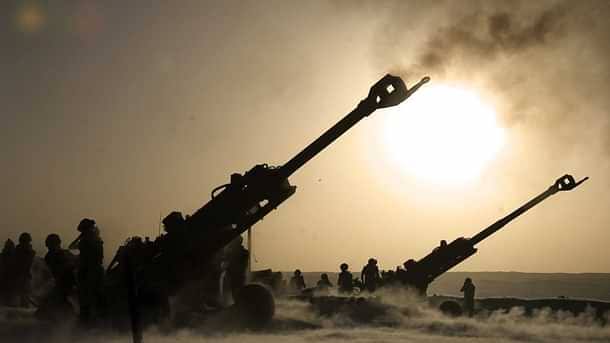
The next big deal pertained to Bofors about which so much has been written. The merits of the Bofors FH-77 155 mm howitzer are not in question, though ignorant people like Ram Jethmalani tried to paint it as a dud. But what became apparent was irrespective of which howitzer was bought Ottavio Quattrochi and the Hinduja brothers were cut into the deal. The Hinduja influence to peddle went beyond parties. Atal Behari Vajpayee even wrote to then Prime Minister PV Narasimha Rao to exonerate them of all charges and Ram Jethmalani defended them in court.
Quite evidently the Hinduja’s were even involved in the long pending deal for Advanced Jet Trainers, BAE’s Hawk. Like the Bofors howitzer, the Hawk is a top class weapons system. That is not the issue. The issue is, as always now, how much more did we pay?
It is well known that money invariably changes hands discreetly in the arms deals all over the world. But the difference between other countries and India is just this. If caught the punishment abroad is swift and exemplary. In Japan PM Tanaka went to jail for the Lockheed scandal. In UK John Aitken, a former Defence Minister served a jail sentence and Roland Dumas a former Foreign Minister of France was convicted for his role in the Frigate sale deal to Taiwan. In the Tehelka case the Army took action against Major General P S K Choudhary and four serving officers. However, in most cases the money peddling middlemen, politicians and bureaucrats involved have got away without even a reprimand.
There is little doubt that military purchases of all kinds, whether fresh meat and vegetables for the troops, or tents in frontier areas, or winter gear in high altitude deployments or equipment of any kind involves the movement of money under the table to facilitate the movement of files and to obtain required quality and performance okays. Very little is purchased without grease money speeding the process. Like in the civil services some military arms and departments, like the branches concerned with logistics, recruitment, the MES, and defence estates are considered lucrative. Because all defence purchases are garbed in the cloak of secrecy very little gets out. Sometimes things come out into the open due to falling out among the brass or due to the pulls and tugs of competition not willing to take a rejection.
It is widely known that a former GOC-in-C of the Army’s Northern Command, Lt.Gen. HS Panag was transferred out to the Central command because he ordered an enquiry into the purchases of his predecessor, Gen. Deepak Kapoor. The Sukhna matter, which resulted in the court martial of two lieutenant generals, has its antecedents in the intra service rivalries that pitched the then COAS against an Army Commander, Lt.Gen. VK Singh. The Tatra matter has spilled out in the open partly due to the efforts of a competing manufacturer, Ural Motors. Quite often foreign intelligence services also make available information that could compromise a deal.
It is well known that when the government purchased the Mirage 2000 the Russians were extremely unhappy about. Soon New Delhi swirled with talk of a scam. In 1987 details of the Bofors and HDW submarine deals began to vitiate the mood against the government. Those in the know inferred that the second part of the Mirage 2000 deal was scuttled lest the Russians slipped out some uncomfortable details?
Why have things become so murky? The problem begins because of the Ministry of Defence’s (MoD) patently stupid rules on agents and representatives acting on behalf of foreign or even Indian manufacturers. The MoD just doesn’t recognize their existence, when they are everywhere. Less than a kilometer away from South Block where the Defence Minster, the three service chiefs and the Defence Secretary sit is the tony Claridges Hotel. The Claridges Hotel is to defence ministry sleaze, what the Taj Mahal is to love. It is a supreme symbol of all that goes on within that ministry. Suresh Nanda, one of the capitals most successful arms dealers and a son of Admiral SM Nanda, a former Navy chief, owns the Claridges.
When an international arms sale or purchase takes place, money changes several hands and passes into many pockets. One set of pockets, which everyone commonly acknowledges are that of the main buyers. Another tranche goes to the single or multiple dealers. The in between and go between people, like the Choudhary brothers, the Hinduja brothers and such. The not very commonly known pockets to get lined are those of the higher ups in the seller country government and companies.
French Presidents routinely got money from Col. Muammar Gaddafi for weapons sold to him. Many here in India believe that some money was paid to people close to Russian President Boris Yeltsin for the Sukhoi 30 MKI deal. The Sukhoi deal became very wing heavy in India because it involved four regime changes and each and every one took its bite off it.
British Prime Ministers too routinely get involved in arms sales, often to their own benefit. Margaret Thatcher’s son Mark Thatcher was involved in the sale of 220 Tornado aircraft to Saudi Arabia. Huge kickbacks were paid to several Saudi royals and Mark Thatcher himself received his share for his part in the deal. Recently the British newspaper The Guardian published: “The MoD documents reveal that the price of each Tornado was inflated by 32%, from £16.3m to £21.5m. It is common in arms deals for the prices of weapons to be raised so that commissions can be skimmed off the top. The £600m involved is the same amount that it was alleged at the time in Arab publications was exacted in secret commissions paid to Saudi royals and their circle of intermediaries in London and Riyadh, as the price of the deal.”
Interestingly enough, the Lockheed-Tanaka deal caused the USA to pass some of the most stringent anti-corruption laws and the implementation of which has seen several US mangers being sent to prison. Today US arms companies function under the weight some very strict ethical norms and compliances. Bribery is almost out. No professional manager will stick his head out and risk a jail term, not with so many potential whistle-blowers about. Whistle blowing is an honored American tradition and US law protects whistle-blowers. So who will buy American arms when American arms purchased implies foregone commissions and earnings?
But the Americans still do quite well. President Barack Obama cajoled Indian Prime Minister Manmohan Singh into buying Boeings giant C-17 Globemaster heavy lift aircraft. India will buy 10 of these aircraft at a total cost of over $4billion. This order materialized without the process than went into the MRCA deal. The question that still remains unanswered is what did Obama tell Manmohan Singh?
Sometimes these kinds of deals don’t go through despite top-level confabulations. When the IAF tried to buy Airbus tankers from France the Finance Ministry rejected it outright and said there was no reason why the IAF should not stick with the proven Russian Il-76 tankers it already had and suggested that more of these can be bought, if required.
One new favorite arms selling nation following the advent of the BJP led government has been Israel. Almost every deal with Israel raises questions about probity. Indians and Israelis obviously understand each other and each other’s needs quite well. It is commonly believed that India routinely over pays for purchases from Israel. A case in point is the Heron UAV. Sudhir Choudhary owns the sub-contractor manufacturing this UAV. In 2009 India entered into an agreement to develop medium range surface to air missiles (MRSAM) worth Rs.10,000 crores with Israel Aircraft Industries. (IAI). But the curious part of the deal is the Rs.600 crores provided by the Israelis as “business charges”. This obviously is for the services provided by Sudhir Choudhary.
When given this explanation, then Defence Minister, AK Anthony was satisfied. But never bothered to ask what these “business charges” were for? As long as people like Anthony don’t ask, the people will never know. And it will be business as usual, as always. And the nation will pay and pay.
Discover more from समता मार्ग
Subscribe to get the latest posts sent to your email.