— Randhir Kumar Gautam —
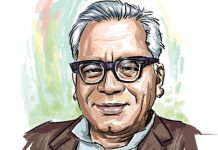
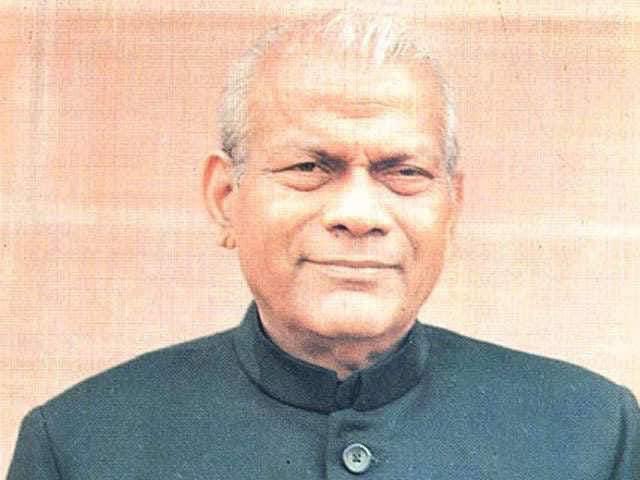
Rabi Ray was one of the unique Indian leaders produced by the Indian philosophy of Socialism. Born on 26 Nov. 1926 in Puri [Odisha], he showed a keen sense of justice right from his childhood, and this became evident when he granted land rights to the farmers who were tilling his family land. As a student, Rabi Ray showed great awareness and drive as President of the Ravenshaw College Law College Union. The spirit of nationalism which was in the air those days brought him to join the Socialist Party in 1948. After remaining active in unionist activities as a student leader, he became Joint Secretary of the AISYS [All India Samajwadi Yuvak Sabha] in 1953. It was from Puri constituency in Odisha that he won the 4th Lok Sabha seat and became leader of the SSP in Parliament in 1967. This was the year when a great tragedy struck the socialist world in India in the loss of Dr. Lohia, who was a torch bearer of the socialist movement.
Rabi Ray had a great acceptance as a leader among the party rank and file, as well as cutting across party lines, and it became evident when he was unanimously elected Speaker of the 9th Lok Sabha. He was a man of metal and his credentials as a socialist never slackened. He was against any sort of political expediency, and never went for instant gains. In fact, his vision was the long term quest of nation building which is evident from his praxis. He says: “Life is an unending quest, an unending journey. I cherish remaining a socialist soldier till I breathe my last”.
Lohia exerted great influence on the socialist thought. It was under the visionary spell of Lohiaite socialism that Indian socialists worked for empowering the opposition right from the elections of 1952. They believed that the politics of non-Congressism could create opportunities so that transformative politics could be practised in Indian society.
Rabi Ray, inspired by the freedom movement, possessed a great passion for social movements, which saw him fight the Emergency and join JP movement, which landed him in Ambala Jail. Later on, he joined Lok Dal, and then, the Janata Party and was engaged in guiding the social legacy during these trouble torn times.
Some reminiscences and reflections of Rabi Ray’ throws light on the inspiring spirit of Dr. Ram Manohar Lohia who motivated people to enter national mainstream and serve the country and the society.
Very few political leaders evince so much intellectual clarity about Indian politics, as Rabi Ray possessed, which always made him take a stand. He would support youth and women and exerted a great influence on young men to wean them towards socialism through seminars and Yuvjan Sabha activities. Rabi Ray worked to bring many women into the socialist movement, believing the words of Dr. Lohia who had said: “Socialism without women is like a marriage without a bride”
Rabi Ray’s pre-eminent preference for the mother tongue brought him the distinction of delivering his maiden speech in Parliament, in Odia. Prior to him, people had delivered their maiden speech in only Hindi. Behind this was his philosophy of opposition to colonialism. . He was against the dominance of English which made him prefer his mother tongue for his maiden speech. As Speaker of the Lok Sabha, he became the highest constitutional authority ever from his state Odisha.
As a staunch follower of the Lohia politics, Gandhian philosophy and later following in the footsteps of Loknayak Jayaprakash Narayan, he promoted the cause of People’s Democracy, and formed Lokshakti Abhiyan Manch to fight corruption, consumerism and centralization. His leadership was multi-dimensional. He could be described as a democrat, a reformer, a well-read scholar, an inspiring orator and a Lohiaite socialist who was accessible, and approachable, and his politics gradually turned towards the grassroots.
On the subject of India’s International relations and security, he was a strong critic of Chinese colonialism in Tibet and supported the demand of the Tibetan refugees for self-determination and autonomy. He was a part of several peace-building initiatives and quite concerned about the Maoist challenge.
As a builder of institutions, Rabi Ray established the Lohia Academy in Bhubaneshwar, which was conceived as a platform for seminars, public lectures and conferences on matters of public interest. He wanted to strengthen the democratic culture by promoting public dialogue.
He was a great votary of Parliamentary Democracy, worked to ensure the effectiveness of parliamentary committees and came up to the expectations of the Members of Parliament. His unanimous election as Speaker was indicative of his broad acceptance and respect for his statesmanship.
Rabi Ray, who never tolerated corruption in any form, favoured ideological and committed activism while his politics represented a blend of statesmanship, socialism and social movements.
His term as Speaker of Lok Sabha was marked by high integrity and fearlessness. He admitted an impeachment motion against Justice V. Ramaswami, and constituted a Committee consisting of Justice Pb Sawant of Supreme Court, Chief Justice P.D.Desai of Bombay Hith Court and Justice O. Chinnappa Reddy, retired judge of the Supreme Court to investigate the allegations. Sri Sahu observes:
“He belonged to the great league of Speakers like G.V. Mavalankar, who propounded and upheld the principle that the secretariats of Parliament must be placed on an independent footing and be free from the control of the Executive—the cardinal principle of constitutionalism enshrined in Article 98.”
Rabi Ray, while serving as Health Minister, tried to institutionalise specialized healthcare in India. Realising the urgent need for quality cancer care in the country, he made sincere efforts to develop and strengthen the existing cancer treatment facilities.
He believed in love, compassion and humility. During his public life, his conduct was never governed by power. He was always in touch with the people through social groups and organizations and extended support to them. Many young socialist leaders have fond and living memories of the times when their association and interactions with Rabi Ray helped shape their vision.
His deep understanding of the politics of globalization and the workings of international organizations, in the last phase of his political career, made him interested in Jayaparkash Narayan’s vision, especially in his concern for communtarian and grassroots democracy.
Inspired by Lohiaist socialist thought and action, he brought a unique spirit to the people’s movements. He not only theorized socialism, but also operationalized it in the Indian society.
Rabi Ray’s Lokshaktri Abhiyan was meant to put the people at the centre of politics. He believed in inculcating the true essence of democracy, – participatory and communitarian – based on trusting people and involving them in all the affairs. Narmada Bachao Adnolan and Mazdoor Kisan Shakti Sangathan [MKSS] which are based on the politics of empowerment were influenced by this thought.
His legacy can be defined in this way: Rabi Ray was a socialist to the core, a democrat by instinct and a Gandhian by temperament. A leader truly of the people, by the people and for the people who loved youth and students and provided inspiration to political activists devoted to people’s causes.
Post-Emergency, the Janata Party came into existence after the merger of Lok Dal, Socialist Party, Congress [O], CFD and others and Rabi Ray was made the All India General Secretary of the Janata Party.
When he was in Ambala Jail during Emergency, he requested Shri Krishan Kant, who later became the Vice President of India, to bring him complete works of Mahatma Gandhi, which shows the influence and quest of Gandhian thought on his life and philosophy.
The greatest moment of his public career was his unanimous election as Speaker of the 9th Lok Sabha, when Sh. VP Singh was the Prime Minister. His election showed his great acceptance, cutting across party lines, although he came from a small state like Odisha.
During his tenure as Speaker, he will be remembered for his landmark reforms in Parliamentary Democracy. The most important reform was his introduction of the system of Department based Standing Committees in 1989. It was a historic initiative which made the government, especially the bureaucracy accountable to the Parliament. These committees continue to give strength to the Parliamentary Democracy in the country.
Rabi Ray had an illustrious career as a public figure. He served the country with a rare blend of nationalism, socialism and humanism. His deep commitment to democracy, parliamentary integrity, and empowerment of the people through institutions and movements are the distinguished hallmarks of his career as a great Parliamentarian of India.
Rabi Ray’s career was truly illustrious. He served the nation with a rare blend of nationalism, socialism, and humanism. His life reflects a deep commitment to democracy, parliamentary integrity, and the empowerment of people through both institutions and movements.
Discover more from समता मार्ग
Subscribe to get the latest posts sent to your email.