— MOHAN GURUSWAMY —
During the 2014 Lok Sabha election campaign, Shazia Ilmi (now in the BJP, where she is no doubt still thinking communally) kicked up a furor when she urged Muslims to think communally. She was not asking for votes for the Jamat or Majlis. She was soliciting support for the AAP, which is not by even any touch of the sun a communal party. What she was trying to say was that Muslims have for far too long been voting for the Congress or other self-styled secular parties, without thinking of their own interests. By extension it was time that they thought of themselves first, meaning pursuing their legitimate interests.
What she clearly meant when she exhorted Muslims to think “communally” was to vote for or in their interests. But there is no doubt that she was then pitching for the AAP. This is exactly what the AIMIM’s Asaduddin Owaisi was doing in Bihar and is doing in Maharashtra now. Telling Muslims to think communally is an idea whose time has come. But first understand what communal means?
Ilmi had used the words “communal” and “secular” in the commonly misunderstood sense of the words. To be “secular” is to be a skeptic about religion and belief in God and all the scrambled thinking that goes with that contemplation. To be secular is to be rational. We have for long misusing this word to mean tolerance.
You can be tolerant by quietly suffering all the nonsense that goes on around with the stated purpose of saving our souls and to point it in the right direction when the time comes. To be “communal” is entirely something else. It means having communitarian values. But more about it later.
When Shazia said, “be communal”, she was telling Muslims to think of the quam. Now quam means both the ummah and the nation. She is seen exhorting Muslims to be “communal” which in this context means, quam, to vote in their self-interest. In other words, in the interest of the quam. Muslims are a distinct and substantial minority in India, and what’s wrong if they have to think in their own collective interests? The facts are that Muslims, by and large, have got a raw deal in the development of this country. The social indices are glaring. Their separatist leadership had mostly fled to Pakistan and those who remained with India quite clearly don’t understand the word secular. This leadership mostly became less interested in reform within the Muslim community and kept the community feeling beleaguered instead of claiming a rightful place in the new India.
Muslims in India are now mostly ghettoized. That once comrade in arms of Narendra Modi, Pravin Togadia, was not long ago trying to prevent a Muslim homeowner from moving into his recently purchased house in Bhavnagar, because he is a Muslim. He wanted him to go back to his ghetto. So why shouldn’t a Muslim think in his or her quam’s self interest?
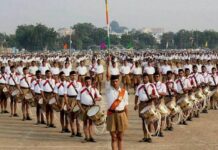
If you want Muslims to think in terms of the larger collective interest you will need to first get them out of their kasbahs, mohallas and ghettos, and treat them as one of all of us. The fact is that we don’t do that with anybody. Ask any northeasterner. Ask any adivasi. Ask any madrasi. As a nation we seem largely incapable of living with diversity, which is odd considering there is no other nation in the world with such a wealth of diversity. With government pursuing the RSS agenda we are no longer pursuing the notion of a new India based on modern and egalitarian notions.
But how is her message communal, in the colloquially understood sense of the word? If these interests are served by voting for the BJP, as some Muslims do, so be it. There is nothing wrong if Muslims vote as a group. Farmers do. Doctors do. Some Hindus do. Hindi haters do. Muslim haters do. Ex-servicemen do for OROP. Industrialists do. (Look at them falling over each other fawning over Modi.) Shopkeepers do. Dalits do. Adivasis do. We all do because we all also have some smaller identities under the Indian umbrella also.
The BJPs appeal is often quite vocally sectarian. The Akalis are a sectarian party. The UP and Bihar parties are entirely caste based. And their leaders target followings with distinct messages. And so what’s wrong if someone says that Muslims must vote in their interests and “think communally” while doing so?
Incidentally, the word Communal is misused in India. To be communal is to think of society as a whole. According to the Random House Unabridged Dictionary, Communalism is a term with two distinct meanings: (1) “a theory of government or a system of government in which independent communes participate in a federation”; (2) “the principles and practice of communal ownership”. Politically, communalists advocate a stateless, classless, decentralized society consisting of a network of directly democratic citizens’ assemblies in individual communities/cities organized in a confederal fashion.
The word we want or don’t want is Sectarian. Sectarianism is bigotry, discrimination, or hatred arising from attaching importance to perceived differences between different denominations of a religion, or religions or sects. The underlying bases of these differences are invariably theological or ecumenical.
The ideological underpinnings of attitudes and behaviors labeled as sectarian are extraordinarily varied. Members of a religious or political group may believe that their own salvation, or the success of their particular objectives, requires aggressively seeking converts from other groups; adherents of a given faction may believe that for the achievement of their own political or religious project their internal opponents must be converted or purged.
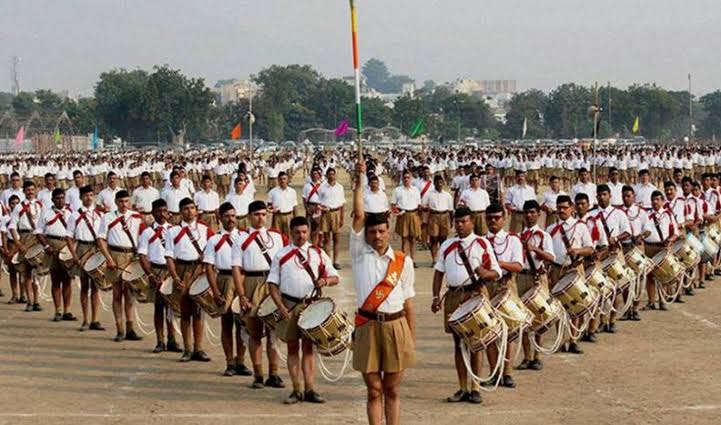
To be sectarian is to think on the basis of professed religion. The VHP is sectarian. The RSS is sectarian. The Bajrang Dal is sectarian. The MIM is sectarian. The Jamat is sectarian. The Muslim League is sectarian. The Akali Dal is sectarian. The Shiv Sena is all but sectarian. The Samajwadi and RJD are blatantly casteist.I wouldn’t mind it one bit of these crazies became more communal and espoused more communalism.
Discover more from समता मार्ग
Subscribe to get the latest posts sent to your email.