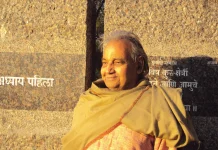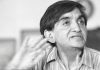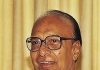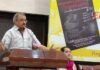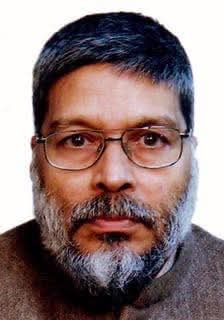
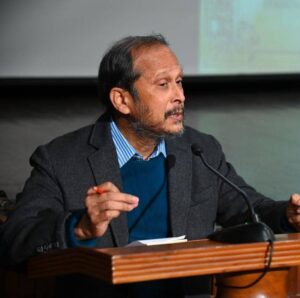
Passing of Prof Satish Jain one Nobel Laureate, Prof Amartya Sen, profusely acknowledged Prof Jain’s contribution to the Social Choice theory; another Nobel Laureate, Abhijit Banerjee, considered Prof Jain one of his favourite mentors in the department of Economics in JNU. Prof Jain was a man who led an unorthodox life, on his own terms
The news of Prof Satish Jain’s passing yesterday came more as a relief than as a shock. He was suffering for more than two months, confined to bed, unable to talk. For someone who was full of life, who spoke quite passionately, in person or over the phone, it was a distressing state difficult to bear for a long time.
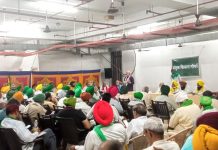
I was attending the Rabi Ray Centenary Celebration Seminar at Bhubaneswar yesterday. So were Prof Anand Kumar, the socialist ideologue, Lingaraj, the farmers’ leader, G V Venugopal, a former IAS officer, among others, who all knew Prof. Jain well. In fact, Venugopal broke the sad news to me. Then I checked the Sunil Memorial Trust (SMT) WhatsApp group. Malabika Pal, a Trustee, had shared the news early in the morning. Prof Jain was the chairman of the Trust formed more than 10 years ago to commemorate the memory of Sunil, a fellow socialist student activist in JNU of our time and then a student of Prof Jain in the department of Economics.
Malabika and I had travelled to Agra to see Prof Jain on August 3, a couple of days after he had returned from the hospital to his residence. Prof Jain had become virtually immobile for years; he was mostly confined to his home. He as well as all of us who knew him and sometimes visited him had accepted that condition as normal. But, last August, things changed for the worse. When he was admitted to hospital after intense bleeding, Prof Jain was diagnosed with an advanced state of cancer.
As per the routine protocol, the doctors had proposed chemotherapy, but Prof Jain was emphatic that he would not submit to it.. He told us quite openly and in clear words: “I know my life span is just about three months. I don’t want to prolong it by another couple of months or so by undergoing the tortuous process.”
That day we spent almost five hours at Prof Jain’s residence. His family members were there; Abha, another former student, was also there. Prof Jain had always been a warm host. He ensured that we had a hearty meal. But what made the day for me was the long conversation that I had with Prof Jain on a rainbow of issues confronting us. Later, three professors of the Economics department in JNU, who were all his former students, joined in.
I was always curious to know how a professor of modern economics like him had so much interest and faith in and knowledge of Ayurveda and traditional medicine. That day I got the answer. Apparently, when he came back from the Rochester University armed with a Ph D degree, Prof Jain joined the Indian Statistical Institute, Delhi as a faculty. There were quite a few young faculty members as his colleagues with degrees from distinguished universities abroad. They got together to explore, at their leisure time, the ideas and wisdom of traditional knowledge.
Prof Jain and a colleague with an IIT background, chose to study aspects of Ayurveda. Some others studied astrology and the like. Every fortnight, they would meet and bounce off their newly acquired insights.That’s how began his life-long association with Ayurveda. He had apparently perused every literature available on traditional cure and practised it all his life. He had, in fact, completely abandoned modern allopathic medicine. As Yogendra Yadav said yesterday, one needed to explore further how a professor of the most advanced discipline of Economics was so much convinced about the effectiveness of the most traditional methods of treatment!
Satish Jain joined the economics department in JNU in 1978. Prof Arun Kumar says that Subramanian Swamy was also a contender for the same post. The latter was a graduate from Harvard University; he was a distinguished member of the Jan Sangh and the Janata Party which was in power then in the union government. The Education ministry had raised questions about the selection, but apparently Prof Amit Bhaduri, then chairman of the centre, emphasised the fairness of the selection process and the matter was laid to rest.
Prof Jain came from Agra with a socialist background. Some of us, under the leadership of Jasbir Singh and Chengal Reddy, had formed a Socialist Study Circle. We descended at Prof Jain’s residence on a Sunday. I remember, he was sitting on the floor, cross-legged, in a Padmasana posture. He warmly greeted us and engaged in a free-wheeling discussion. After a while, he got up and offered us snacks. That became a routine; whenever we went to his place, we had a lot of food, both for our thought and for our stomach.
Prof Jain’s address in our study circle was a big draw. Shambhunath Singh, then the convenor of our socialist group, was recalling yesterday how Prof Jain’s comparison of Mao with Gandhi in a study circle deliberation had caused quite a flutter in the JNU campus those days.
When I was elected president of the JNU Students’ Union, Prof Jain was one of the few faculty members whose moral support I got in a predominantly Communist-dominated campus. When I was expelled from the university for leading a student agitation, he was one of the few professors who defended me for taking on the might of the establishment.
After I left JNU, my link with Prof Jain got snapped. Our lives went off in different trajectories. We met, after long years, in unfortunate circumstances, in the All India Institute of Medical Sciences. We all had congregated there after hearing the news that Sunil had suffered a brain stroke. Sunil, Prof Jain’s favourite student, passed away the next day.
Sunil was the topper of his class but what made him stand out was his ideological conviction. He could have got into any premier university of the world for higher studies or could have landed any cushy job, but he gave up everything to work among the tribals of his native Madhya Pradesh.
Prof Jain, along with Prof Arun Kumar and Shambhunath Singh, mooted the idea of forming the Sunil Memorial Trust. I too became a Trustee; that’s how our active association renewed from 2013.
After his retirement from the JNU, Prof Jain shifted to his flat in Gurgaon. We used to have our Trust meetings there. But, after a while, Prof Jain’s stay in the NCR became untenable, because of his limitations of movement. He was a bachelor. He needed close supervision and support. That’s why, he decided to shift to Agra where his nephew and his family lived.
After he shifted to Agra, I used to have long chats with him over the phone. If, by any chance, he missed my call, he would make it a point to call back. What surprised me was that, despite all his debilitating circumstances, he was always so cheerful, so optimistic and so full of life.
His needs were so few; in the morning, he invariably had green coconut water and a banana or an apple for breakfast; he usually had soup for lunch. The only full meal he used to have was in the evening: that too was a simple vegetarian fare. He used to say that we tend to eat more than what our body needs and we should avoid it as far as we can.These were just not temporary fads for Prof Jain; these were matters of his life-long conviction.
During my conversation in the beginning of the year, he told me that he was trying to edit some unpublished research papers he had written in the earlier years and put them together in the form of a book. Was it possible for him to access the latest developments in his discipline from the confines of his home, I asked. He said he was privy to some of the exclusive research domains on the Internet from which he could draw upon.
Prof Jain’s specialisation was Social Choice theory of which Prof Amartya Sen is the best-known international exponent. Prof Jain was never a direct student of Prof Sen who went on to become a Nobel Laureate, but it was gratifying to note that Prof Sen had profusely acknowledged the contribution of Prof Jain to the discipline of social choice theory.
Prof Jain’s students remember his illustrious career as a teacher. He taught so many generations of students, Abhijit Banerjee, the Nobel Laureate, being the best-known among them. He might have been a mentor to every PhD student who worked under him but he treated each of them more as a friend than as a mentee. Everyone who came in contact with him vouched what a warm human being he was.
Prof Jain had his quirks; he was a chain smoker; as Rajesh Mohapatra said yesterday, as a student, he found justification for his own smoking habits seeing Prof Jain puffing away.
But then as Prof P K Basant said yesterday, Prof Jain was a fighter. He, a professor in JNU, landed in Bhopal to protest against the Union Carbide culprits and was put behind bars for a considerable period. He apparently learnt astrology from some of the inmates during his prison stay in Bhopal!
One can see that Prof Jain led an unorthodox life; he lived and died on his own terms. That’s a life we ought to celebrate on his passing.
Discover more from समता मार्ग
Subscribe to get the latest posts sent to your email.