— MOHAN GURUSWAMY —
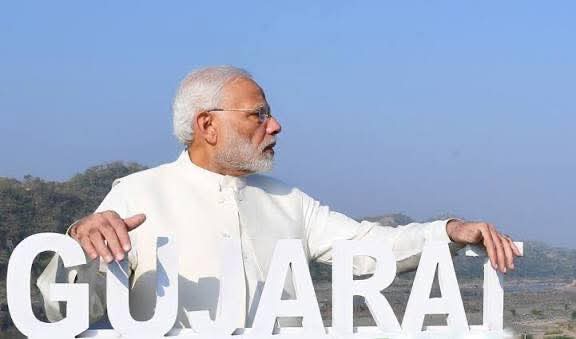
IN September 2013 or thereabouts I posted this note on my FB page. The usual bunch of ignoramuses jumped out of the woodwork, without considering the data, or often, I suspect, without even wherewithal to analyze the data, to accuse me of slandering Narendra Modi’s Shining Gujarat.
Now we have have India-Today out with its rankings. Kerala is No.1, AP is No.2, Tamil Nadu is No.3 and Gujarat is No.4, down from No.1 the previous year. Even LK Advani’s favored Shivraj Chauhan has not fared well at all. MP is now at No.10. Quite clearly there is a huge gap between hype and facts.
Kerala has consistently done well over the years, as it has invested heavily in people. The investments in Health and Education have been paying off. I have had people telling me on these very pages as to how good Gujarat’s Roads are. Well it ranks No.13 now. In terms of Governance AP and MP are No.1 and No.2. Even in terms of Investment, Gujarat has slipped down to No.16. But Gujarat is still No.1 in one important parameter. Its finances have shown a distinct improvement. But the so have those of Kerala, Rajasthan and Bihar. We must now wonder seriously if there is something called a Modi Model at all? The facts say otherwise. But the PR machinery is working overtime, literally and figuratively. Facts be damned, let the cash registers ring!
The Modi Miracle: Economical with the Truth!
The moment of inflection for Narendra Modi’s regime in Gujarat, when it curved away from being viewed negatively after its cold-blooded and bloody conduct during the post-Godhra riots, was when in 2005 the Rajiv Gandhi Foundation, headed by Sonia Gandhi, ranked Gujarat under Narendra Modi as best in the country for something called “Economic Freedom”. To Narendra Modi this was a match winning self-goal gifted by a ruling party whose left hand obviously did not know what the right hand was doing. The Gujarat government was quick to take advantage of this deemed accolade from the ‘enemy’ by taking full pages in the national newspapers advertising this “honor”. This was soon followed by Mamata Banerjee’s exertions at Singur, supported by the unlikely triumvirate of Anil Ambani, Amar Singh and Medha Patkar, which drove Ratan Tata and his Nano straight into the arms of Narendra Modi. The legend of the Modi and his promised land of Economic Freedom went stratospheric and still shines brightly from up there, but what is Economic Freedom?
The notion of Economic Freedom traces its origins to a series of seminars between 1986-94 sponsored by the Fraser Institute of Canada and hosted by Milton and Rose Friedman. Milton Friedman is a Nobel Prize winner in Economics and his brand of economics stands at the most rightward fringe of the spectrum. His policy preferences have been criticized by a galaxy of economists including John Galbraith and Amartya Sen as insensitive to people and sensitive only to profit. The economics espoused by Milton Friedman found its most sincere adherent in the dictatorial regime of Augusto Pinochet in Chile. Other prominent proponents of Economic Freedom are two of the most conservative US think-tank’s, the Heritage Foundation and the Cato Institute. It is therefore somewhat ironical that the Rajiv Gandhi Institute of Contemporary Studies (RGICS) of the Rajiv Gandhi Foundation got mixed up with something quite as dubious as Economic Freedom. One must wonder what the UPA’s National Advisory Council has to say about Economic Freedom? Or whether they even know about such things?
While Economic Freedom is packaged as a new idea with the Wall Street Journal happily celebrating its umpteenth anniversary, it is in fact mostly a rehash of all that went with the Cold War ideology of free enterprise and free markets. Whatever it is, it is not an economics term that finds recognition in my copy of the MIT Dictionary of Economics. What it actually is nothing but a brand of politics promoting an ideological lifestyle favored by ultra-rightists. The Fraser Institute itself best describes it as follows: “Economic freedom is the extent to which one can pursue economic activity without interference from government. Economic freedom is built upon personal choice, voluntary exchange, the right to keep what you earn, and the security of your property rights.” Simply stated this just means that good governments are those which let the rich do what they want, take all they want, and keep all they want, and the people be damned. In short the market will take care of everything. This is as dumb an ideology as that where the state is everything and takes care of all, better known as communism.
The annual Economic Freedom of the World Report published by the Fraser Institute in conjunction with members of the Economic Freedom Network, ranks countries on their level of economic freedom. Incidentally the RGICS is not a part of this network, which then begs the question as to why it did something so dumb as appearing to endorse the Narendra Modi government? Last year’s rankings had India ranked 94 along with Tunisia and way below countries with few real freedoms like UAE (14), Kuwait (47), Oman (28), El Salvador (43), Panama (23) and Jordan (62). Thus, it seems that while Economic Freedom is a composite index of individual liberty, limited government and free markets, the weight accorded to individual freedoms is at best marginal. On a scale of 10 even the top ranking Hong Kong got 9.01 while the USA got 7.60. Apparently the standards demanded by the makers of Economic Freedom are much too high even for these holy centers of capitalism? The Heritage Foundation in conjunction with the Wall Street Journal seem to have a somewhat different scale but it comes to about the same conclusions. Thus while their index considers Saudi Arabia to be mostly free, it considers India to be mostly unfree, like China!
Now lets get back to the Narendra Modi government, which is shouting hoarse from the treetops that it is the best-governed state in India. That’s not even close to the truth for the RGICS study was not evaluating performance. Economic Freedom is not about good government. It is not even about economic achievements. It is about the least government and looking most business friendly. It is as if a policeman is to be judged by how crisp and clean his uniform is and not by his professional achievements. Gujarat’s achievements in economic and social development during the last decade do not support its advertisement of itself as the best governed state. In terms of economic growth at constant prices, in the period 2001-2010 Gujarat averaged a growth of 8.68%, which ranks it well below Uttarakhand (11.81%) and Haryana (8.95%). In fact the change in the rate of growth from the pre-Modi era to the Modi era was merely 8.01% to 8.68%, when during this period the change in rate of growth in Bihar and Orissa was 3.32% and 3.71% respectively. No wonder Nitish Kumar is irritated by the anointment of Narendra Modi as the growth king.
Ten and more years after the advent of Modi, where does Gujarat rank among the wealthy? In terms of per capita income, in 2011, Gujarat ranked sixth among major states with a per capita of Rs 63,996, after Haryana (Rs 92,327), Maharashtra, (Rs 83,471), Punjab (Rs 67,473), Tamil Nadu (Rs 72,993) and Uttarakhand (Rs 68,292). During 2001-04, industrial growth for Gujarat was 3.95%, rising to a more creditable 12.65% between 2005-9. But how does this compare with the unheralded highfliers? During these two periods, industrial growth for Orissa was 6.4% and 17.53%; 8.10% and 13.3% for Chhattisgarh; and 18.84% and 11.63% in Uttarakhand. Clearly Modi’s Gujarat lags behind and much of the adulation is unwarranted.
With all the Economic Freedom loving countries rooting for him, and with a rich and numerous Gujarati NRI community, one would have thought that, at least in terms of attracting foreign investment Gujarat would have been at the top of the list. But it is not so. During 2006-10, Gujarat signed MoUs worth Rs 5.35 lakh crores supposedly with a potential of 6.47 lakh new jobs. But Maharashtra and Tamil Nadu with MoU’s promising investments of Rs 4.20 lakh crores and Rs 1.63 lakh crores respectively, and promising about 8.63 lakh and 13.09 lakh jobs each are well ahead of Gujarat in terms of promised job creation.
And now lets look at some less discussed but telling benchmarks. Economists like to see credit/deposit ratios ahead of MoU’s, which are in the realm of the future and may or may not happen. Usually not. This is where the real shocker is. The fabled wealth and thrift of the Gujarati does not seem to be working in Narendra Modi’s Gujarat. In 2010, Gujarat’s share in the deposits of India’s scheduled commercial banks was 4.70%, as against 5.42%, 6.20%, 6.34% and 26.60% for Andhra Pradesh, Tamil Nadu, Karnataka and Maharashtra, respectively. The share of Gujarat in total credit disbursed by these commercial banks was 4.22%, while it was 29.75%, 6.71% and 9.61% for Maharashtra, Karnataka and Tami Nadu respectively. The amount of per capita deposit and per capita credit for Gujarat was Rs 37,174 and Rs 24,268; while for Tamil Nadu, it was Rs 42,580 and Rs 47,964; Karnataka Rs 49,598 and Rs 38,154; and Maharashtra Rs 1,10,183 and Rs 89,575. Even Kerala did better than Gujarat with Rs 43,890 and Rs 27,912. Clearly it is not his economic achievements that put Narendra Modi on top of the both Ratan Tata’s and Anil Ambani’s wish list as Prime Minister of India in 2014, or before.
If Gujarat did not do well in garnering wealth, how did it fare in reducing poverty? In the reduction of poverty, Gujarat has achieved a decline of 65.87% since 1977, which while commendable only places it sixth, well below Goa, Kerala, HP, Haryana and Punjab. Even now after so much of “good governance” particularly under Keshubhai Patel, Sureshbhai Mehta and Narendrabhai Modi, Gujarat still has 31.8% living below the poverty line placing it only fifth from the top!
While Gujarat has the highest per capita spending on Roads and Irrigation, it ranks only sixth in per capita spending on Health and Education. The consequences of such priorities can be seen in the human development indices. In terms of reduction of Infant Mortality Rate (IMR), Gujarat has achieved a reduction of 17.94%, which is eleventh in terms of rank leaving it with an IMR of 64 which places it seventh. Gujarat doesn’t do too well in terms of life expectancy with the average longevity being 62.15 years which puts it at eighth place below even Bihar’s 62.85 years. Again in terms of sex ratio, Gujarat is running neck to neck with Bihar with 921 females to every 1000 males. In terms of literacy Gujarat once again is not among the top with 69.97%, which ranks it sixth. When it comes to overall population growth, Gujarat with an annual growth of 2.42% is once again sixth in the ranking. Even in terms of population between ages of 5-14 enrolled in schools, Gujarat with 74.35% stands at sixth place.
With respect to the composite Human Development Index (HDI), Gujarat’s performance is devastating. The HDI for Gujarat, in 2008, was 0.527 and it ranked 10th among the major states. Kerala stood first with 0.790; Himachal Pradesh scored 0.652, Punjab 0.605, Maharashtra 0.572 and Haryana 0.552. Even more shockingly, in terms of hunger the ‘State Hunger Index 2008’ reveals that Gujarat ranked 13th among 17 big states, and even worse than Orissa, officially India’s poorest state.
The RGICS study of Economic Freedom apparently includes “efficient and effective legal system ensuring complete investigation” as a measure. Presumably they did not to consider the Justice Bannerjee Report on the Godhra incident or the Justice SC Jain’s Central Pota Review Committee order excluding the 130 persons from Pota for the same alleged offence. The thousands killed in the rioting and the about turns seen in the Best Bakery case are additional testimony to the effectiveness and efficiency of the legal system in Gujarat, just as they are to the “highest level of safety of life and property and lowest incidences of violent crimes in the country” claimed by the Gujarat government. Here one is hard pressed to contest Gujarat’s contention of having the least government.
There is another perspective on this we could also consider. In terms of value of property stolen during 2003, Gujarat reported Rs. 32,419 lakhs as stolen placing it just below Maharashtra. In terms of property recovery Gujarat had only 9.5% whereas top ranked Haryana managed 68.3%. Then there is another interesting statistic about Gujarat that is quite telling. In 2003 Gujarat reported 1044 cases of kidnapping, which is about half of the numbers reported from the traditional kidnapping states like Bihar, UP and Rajasthan, but well above MP, Maharashtra, Tamil Nadu and Karnataka. But what makes Gujarat truly unique is that almost 90% of those kidnapped were below 30 years and nearly 80% kidnapped were women. This is almost twice the national average. So much for “the highest level of safety of life and property” claimed in Gujarat. The National Crime Records Bureau also reports that Gujarat was no slouch when it came to violent crime with 13.1% putting it ahead even of UP, West Bengal and Punjab, and in terms of IPC crime rate Gujarat with 197.0 was above the national average of 160.7.
There are some other measures we can consider. For instance, in terms of net industrial value added, Gujarat, currently Indian industry’s darling, ranks third, below Maharashtra and Tamil Nadu. It has performed poorly in terms of growth of electricity generation since 1993-94 with a growth of only 18.69%, when the national growth was 43.75%. As a matter of fact among the bigger states it stands only ahead of Bihar. Quite clearly there is more to good governance than just Economic Freedom. Gujarat has not done too badly but to claim that it is the “best governed state” in India based on some dubious index is to be somewhat economical with the truth. But quite clearly for Ratan Tata, Anil Ambani, Shashi Ruia and others who have been excessively laudatory about Narendra Modi, Economic Freedom is preferable to Good Government.
Discover more from समता मार्ग
Subscribe to get the latest posts sent to your email.