— Harsh Sethi —
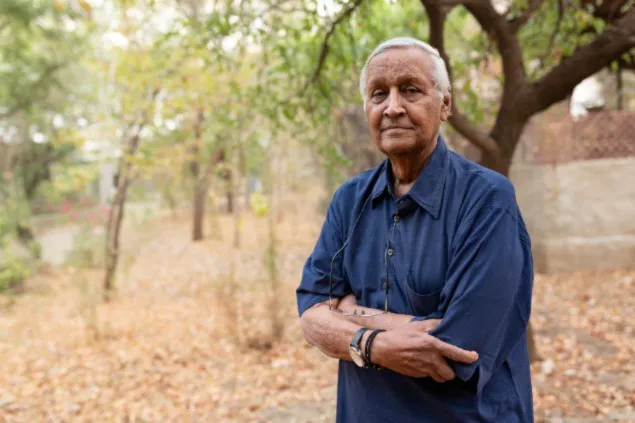
Early in the morning of November 10, 2026, Sanjit (Bunker) Roy passed away peacefully in his home in Tilonia. At his bedside was his wife, Aruna, close associate Nikhil De and Shankar, and numerous workers of SWRC Tilonia also known as Barefoot College and residents of Tilonia who had accompanied him on his five decades plus journey of experimenting with development interventions more suited to the conditions of village India. Though this is often said, particularly in obituaries of individuals who made a mark, the role of Bunker and his associates in heralding a fresh approach to rural development needs to be underlined.
The late 1960s were a turbulent time in the history of the fledgling republic. The death of Nehru, followed soon after by Lal Bahadur Shastri marked an end to one phase of Congress rule. The early hope and optimism of building a new and different country soured by two quick wars, 1962 and 1965, and a debilitating famine from 1967 to 1969. The mood was angry and impatient. For the first time educated youth, including from well-established and prestigious institutions were willing to jettison the well-trodden path chosen by their social cohort and get involved with efforts of societal change. Bunker’s college, St. Stephens in Delhi, was not left unmarked by the new winds of change. Fuelled by both local and international developments, many left to join up with different radical groups seeking a violent transformation in the country. Bunker chose to tread a different path. As indeed did many others. The period saw a flowering of NGO based experimentation across the country.
After a stint with famine relief efforts in Bihar, he chose to make Tilonia, a semi-arid village near Kishangarh in Rajasthan his karmabhoomi. The Social Work and Research Centre (SWRC) began work in 1972 basing itself in a campus built as a TB Centre in the 1930s. Soon he was able to attract a range of young professionals who too were enthused by an idealism to contribute. At the heart of the effort was a belief, not profoundly naïve, that well intentioned, professionally driven interventions in collaboration with the villagers could bring about meaningful change. Notably, unlike the older, well-established Gandhian ashrams or the work initiated by missionary organisations, of all denominations, the SWRC was strictly secular. Also, unlike many other institutions, the accent was on working with Government funds and, often, on official programmes. The effort was to supplement, not supplant, while experimenting with ways which might prove both efficacious and sustainable.
Politics intervened, as it always does. The early 1970s saw deepening of political unrest followed by the imposition of an Emergency. The Janata Party years, 1977-80, saw the SWRC initiative suffer a series of serious setbacks. Given Bunker’s personal association with the Gandhi family and active association with official programmes, SWRC became a target of a witch-hunt, including withdrawal of funding and cancellation of programmes. It hardly helped that an erstwhile employee who had been fired for corruption got elected as the local MLA. More shocking, all the SWRC associates who contested the panchayat elections were soundly rebuffed. Evidently the “do-gooders” had not won the trust of the villagers.
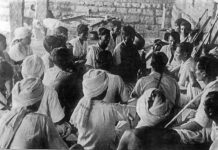
In the churning that followed, many of the urban trained professionals left the organization. Bunker changed course, deciding to eschew any reliance on professional volunteers and instead train minimally educated villagers, both men and women, to take up all the tasks earlier handled by trained professionals. In a manner of speaking, this became an article of faith, and the core faith for Barefoot College. Every activity around ground water and hand pumps, windmills, night schools, primary healthcare, crafts, solar energy and communication technology including videography – just to list a few – was in a few years being run and managed by villagers.
It is not that this phase saw no involvement of professionally trained development workers, but now not as leaders but co-participants. Here Bunker helped evolve a new arrangement wherein individuals with ambition, drive and acumen were encouraged to and assisted in setting up their own organisations with the parent SWRC providing support with proposal preparation, fund raising and developing networks of support. Rather than the parent organisation becoming larger, the idea was to set up a network of autonomous, independent organisations which could better respond to local conditions organically while sharing learning in the network. It is worth noting that many of these organisations, over time spread across the country, became much larger than the ‘original’ body.
Equally fascinating is the parallel effort of Aruna, Shankar and Nikhil, all more politically inclined, to move out of Tilonia to a small village Bhim, in Rajsamand district, to operate, not as a funded NGO but as a rural trade union and social mobilisation group. Many of the initiatives of social empowerment that we are familiar with, including the struggles for minimum wages in official relief programmes, the Right to Information campaigns, multiple struggles for transparency and accountability, or the Right to Food and so on can be traced here. While much of this is well recognised and documented, what is less appreciated is the ‘behind-the-scene’ support of Bunker and the SWRC team, particularly in the early years.
Meanwhile, as the SWRC increasingly morphed into the Barefoot College, the effort shifted focus to training individuals, from within the country and elsewhere, to evolve as confident professionals to work within their own communities and help empower them to solve their own problems, seeking assistance where needed, but on their own terms. From the early training of women handpump mistrys to solar mamas is a long and fascinating journey of empowerment, silent and without fanfare.
To the end Bunker remained true to his vision – the focus on villagers, without degrees but skilled and educated, fighting for autonomy while working on official programmes, diversifying funding support, avoiding becoming larger in size, and intervening in social causes while keeping strict distance from formal electoral and party politics.
Simplicity veering on the verge of austerity, treating transparency and accountability as non-negotiable, seeking to persuade other NGOs to adhere to a ‘code-of-conduct’ (an initiative that has few takers and won him many detractors), taking pride in work and achievements of others – there are many lessons we can draw from his life and work.
How a boy born in a prominent Brahmo family from Kolkata, educated at Doon School and St. Stephens, a highly accomplished sportsman (National Squash Champion) chooses a life and work in the non-descript village of Tilonia and despite setbacks and failures sticks to his path over five decades remains somewhat of a mystery. Yes, he had inherited significant social capital but to reduce him to his family connections or his friendship with the Gandhis (he was a school mate of Rajiv Gandhi) would do him a disservice. Over the years he made more friends than detractors – in part because of his work but also, once you were able to crack through his aloof veneer, his honesty and authenticity, a rare quality. Even when disagreeing with some of his initiatives, or his disdain for the ‘nerds’ and their bookish learning, one could also bond with him over P.G. Wodehouse and racy fiction, and even more his acerbic asides, particularly about the poseurs who populate the development universe. But more than anything else, what made him endearing was his ability to remain true to himself.
Discover more from समता मार्ग
Subscribe to get the latest posts sent to your email.