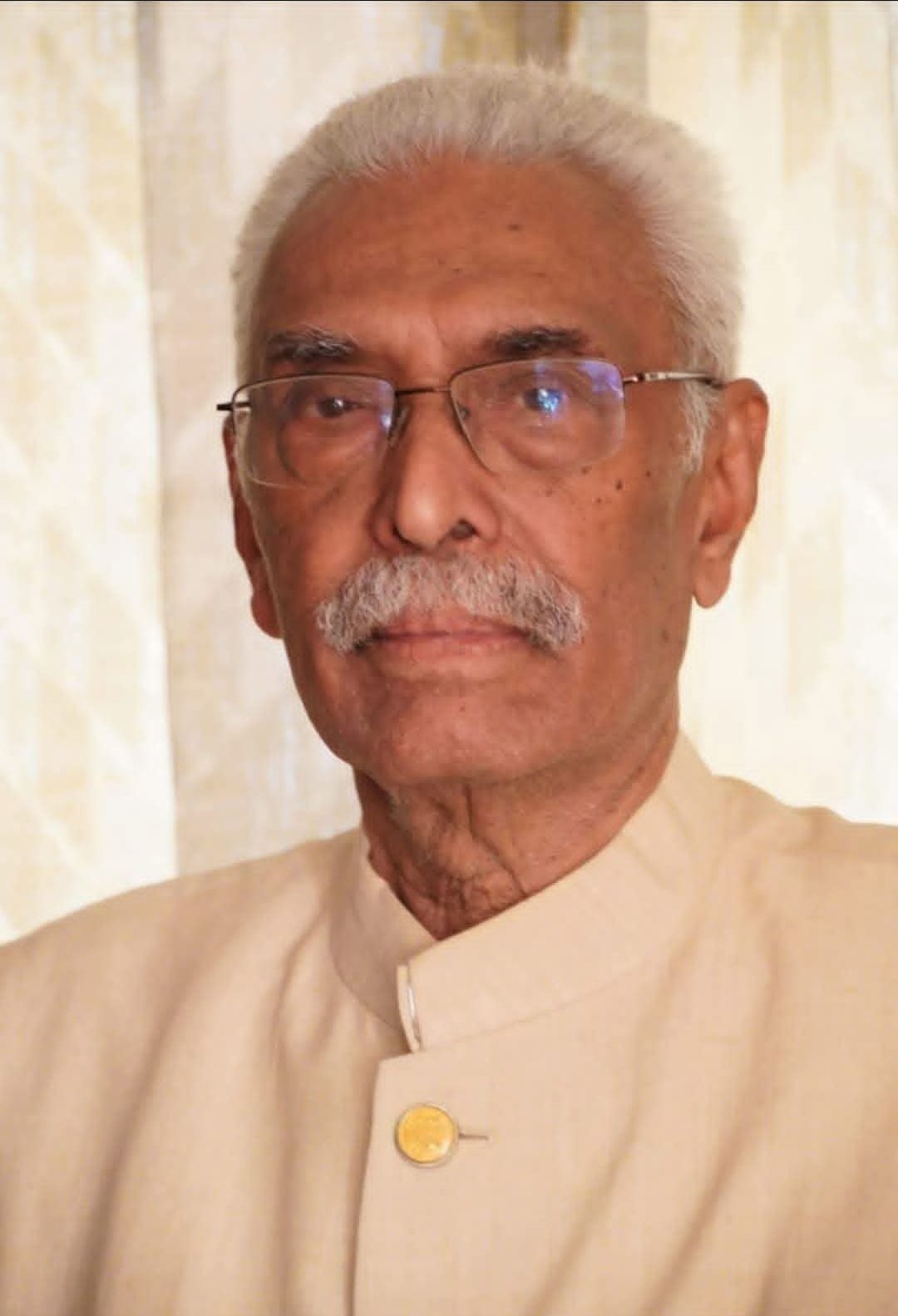
The passing of Professor T. K. Oommen on 26 February 2026 in Gurugram marks the end of a distinguished intellectual journey that significantly shaped the trajectory of Indian sociology. Over a career spanning more than six decades, he emerged as one of the foremost sociologists of post-independence India—an institution-builder, public intellectual, methodological mentor, and globally respected scholar. His death represents an irreplaceable loss not only to Indian sociology but to the broader community of social sciences. He had been residing at his home near the National Media Centre in Gurugram, along the Delhi border. He is survived by his wife, Josephine; his sons, Johny Oommen (Oman) and Koshi Oommen (Bahrain); and his daughters-in-law, Rani and Mary.
Early Life and Academic Formation
Tharailath Koshy Oommen was born on 16 October 1937 in Venmony, in present-day Kerala. Raised in a milieu that valued education and public engagement, he developed early sensitivities to social diversity and inequality—concerns that would later define his scholarly work.
He completed his B.A. in Economics from Kerala University in 1957 and went on to obtain his M.A. in Sociology from the University of Pune in 1960. Under the supervision of Professor Y. B. Damle, he earned his Ph.D. in 1965. His doctoral thesis, later published as Charisma, Stability and Change: An Analysis of the Bhoodan–Gramdan Movement in India (1972), was among the earliest rigorous sociological analyses of a social movement in India. The work demonstrated that indigenous movements could be studied through theoretically informed and empirically grounded frameworks, thereby expanding the methodological horizons of Indian sociology.
Academic Career and Institutional Leadership
Professor Oommen began his academic career at the Delhi School of Social Work, University of Delhi, where he taught from 1964 to 1970. In 1971, he joined the Centre for the Study of Social Systems (CSSS) at Jawaharlal Nehru University (JNU), an institution with which he remained closely associated until his retirement in 2002. Rising from Associate Professor to Professor of Sociology, he became one of the central intellectual figures at CSSS.
His influence, however, extended far beyond JNU. He served as President of the International Sociological Association (1990–1994), a rare distinction for an Indian scholar, and later as President of the Indian Sociological Society (1998–1999). Through these roles, he strengthened institutional linkages between Indian sociology and global academic networks. In recognition of his outstanding contributions to education and literature, he was awarded the Padma Bhushan in 2008.
Major Intellectual Contributions
Professor Oommen’s scholarship traversed multiple domains: social movements, sociology of professions, political sociology, citizenship, ethnicity, nationalism, identity, and social theory. Yet, underlying this diversity was a coherent intellectual commitment—to understanding how modern societies negotiate plurality, equality, and cohesion.
Social Movements and Social Change
His pioneering work on the Bhoodan–Gramdan movement marked a turning point in the sociological study of social movements in India. Later, in Protest and Change: Studies in Social Movements (1990), he deepened the analysis of protest as a dynamic force in social transformation, moving beyond descriptive accounts to conceptual clarity.
Sociology of Professions
With Doctors and Nurses: A Study in Occupational Role Structures (1978), Professor Oommen made a seminal contribution to the sociology of professions in India. The book examined occupational hierarchies, authority structures, and institutional norms within modern professional settings, thereby opening new avenues of research.
Citizenship, Nationality, and Pluralism
Perhaps his most enduring contributions lie in the area of identity and nation-building. In Insiders and Outsiders in India (1986) and Citizenship, Nationality and Ethnicity: Reconciling Competing Identities (1997), he explored the tensions between ethnicity and nationality, majority and minority status, and legal citizenship and substantive belonging. His work provided conceptual tools to understand pluralism in deeply diverse societies.
Rejecting simplistic binaries, he articulated a “pluralist” orientation in sociology. While identifying three dominant streams in Indian sociology—‘institutionist,’ ‘nationalist,’ and ‘cosmopolitan’—he refused to be confined by any one of them. Instead, he advocated theoretical eclecticism, historical sensitivity, and reconciliation between indigenous experiences and universal humanist values. His later works, including Pluralism, Equality and Identity (2002) and Knowledge and Society (2013), reflect sustained engagement with epistemological and normative concerns.
Teacher, Mentor, and Intellectual Presence
Professor Oommen was not only a prolific scholar but also an inspiring teacher. His lectures on sociological theory and methodology were marked by conceptual precision and intellectual discipline. Generations of students remember his insistence on clarity of concepts, empirical grounding, and analytical restraint.
A Personal Reflection
I had the privilege of interacting with Professor Oommen from my student days until the last months of his life. As his student during my M.Phil./Ph.D. at CSSS, JNU, I attended his course on Methodology in Sociology, which became foundational to my doctoral fieldwork. His emphasis on methodological rigor and conceptual clarity shaped my academic orientation in lasting ways.
Our association continued through seminars, conferences, and academic exchanges. Whenever I visited JNU, I sought the opportunity to meet him. He graciously accepted my invitation to deliver a lecture at the Department of Sociology, M. D. University, Rohtak—an occasion that greatly enriched our academic environment.
I particularly cherish his presence, along with Professor P. N. Mukerjee, at the All India Conference held at Trivandrum in December 2019, when I was honoured with a Lifetime Achievement Award. His participation on that occasion meant a great deal to me personally and professionally.
In December 2026, I spoke with him over the phone. Though unwell and confined to bed, he remained intellectually alert and warm. He mentioned receiving my edited volume Social Exclusion, Inequality and Protest under Globalization in India, dedicated to the memory of Professor Yogendra Singh, and referred kindly to my contribution titled “Identity and Human Security in Globalizing India.” I also had the honour of publishing a detailed interview with him (conducted by Professor Vivek Kumar) in both English and Hindi volumes of Conversations with Indian Sociologists in the ISS series.
To me, he was not merely a renowned scholar but a generous mentor and a source of enduring inspiration.
Legacy
The death of Professor T. K. Oommen marks a profound moment of reflection for Indian sociology. His intellectual contributions reshaped debates on social movements, professions, citizenship, and pluralism. His institutional leadership brought Indian sociology into meaningful dialogue with the global academic community. His pedagogical commitment shaped generations of scholars.
Yet perhaps his greatest legacy lies in the intellectual ethos he embodied—critical without cynicism, rooted without parochialism, universal without abstraction. His life demonstrated that sociology is not merely an academic discipline but a moral and analytical engagement with society’s deepest complexities.
Professor T. K. Oommen will be remembered with respect, gratitude, and admiration. His writings, ideas, and example will continue to guide the discipline he so profoundly enriched.
Discover more from समता मार्ग
Subscribe to get the latest posts sent to your email.