No progress is possible without bringing about a change in the existing system. Change is the essence of all progress, Social change does not occur automatically; it requires a conscious effort by the awakened and enlightened people. Without such effort and stimulation societies are known to have petrified and finally become extinct. The requisite stimulation comes from a new vision of the future posing a challenge to the existing system. Any kind of social change inevitably involves the pro. cess of a new type of assimilation and simultaneous elimination of all that is obsolete and outdated. But vision without orga-nisational backing would be entirely barren.
The protest movements have played a very significant role in history in bringing about a desired change. They have many forms.
The dissent we generally notice among intellec-tuals and educated people is basically different from the dissent expressed by the younger generation and the poverty-stricken classes, the workers and peasants. While the one expresses itself through art and literature, religion and culture and a new life-style and acts only as a process of awakening, the other has a tendency to go further to the point of direct action and challenge to the existing social order and establish-ed norms. All such movements invariably – some slowly but steadily, while others with violent impact – tend to subvert the existing order. At times, protest through dissent is con-sidered more subversive than the direct violent challenge. Such protest has been expressed from the days of great philosophers like Socrates. It was reflected in the Protestant and Jesuit movement in Europe and in our own country it was mani-fested in the writings and teachings of great saints and poets like Kabir, Nanak and others.
There are two basic modes of social change the path of violent revolution and that of peaceful, democratic and con-stitutional change. There has been violence even for establish-ing a democratic structure, as during American and French revolutions. The American civil war and recent uprisings in many parts of the world have essentially been endeavours to establish democratic rights of the people and to usher in a new era of peace and an orderly life.
In India we have proclaimed that social change will be achieved through peaceful, democratic and constitutional methods, Even for this we have had to go through an agonis-ing series of struggles. Many revolts, by individuals or groups, were organised against British rule and numerous sacrifices were made.
The revolt of 1857 was a landmark in our history. Before the advent of Mahatma Gandhi on the Indian political scene, many a revolutionary had sacrificed his life to protest against the humiliation of foreign rule. In many cases such sacrifices served merely to awaken the people of India, which itself was a supreme task. However, the really awakening process started in the second decade of this century when Bal Gangadhar Tilak declared at Wardha that “Swaraj is my birthright and I shall have it.”
Only a year later, in 1919, the country wit-nessed the tragedy of Jallianwala Bagh. In 1920, came Lala Lajpat Rai’s exhortation to the youth when he said in Bombay “Rise up, Young India, you are inferior to none. Youngmen of India! Your motherland is at the present moment lying prostrate because of your lack of faith in yourself, in your people and in your country, prostrate because of your weak-ness of mind and weakness of character. Raise up your minds, enthuse yourselves with self-confidence and self-reliance,”
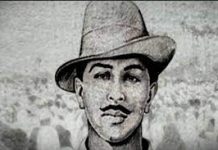
In 1929, Jawaharlal Nehru in his presidential address at the Lahore Congress session said: “Brick by brick has our national movement been built up and often on the prostrate bodies of her martyred sons has India advanced. The giants of old may not be with us but the courage of old is with us still and India can yet produce martyrs like Jatindas and Wazaya.” These were not mere words of exhortation. As we inexorably pro. ceeded towards the final peaceful transfer of power which was to flower into a democratic polity, the country has claimed a long line of inspired martyrs, In April 1929, leaflets thrown by Bhagat Singh and B. K. Dutt in the central assembly indicated the mind of the revo lutionary youth. They said: “We who attach so great a sanctity to human life, who dream of a glorious future, when man will be enjoying perfect peace and full liberty, have been forced to shed human blood. But the sacrifice of individuals at the altar of the great revolution that will bring freedom to all is inevitable.” Before his death while writing to the governor of Punjab, Bhagat Singh said: “A war has been declared against you and this war will continue till the exploi-tation of the toiling society and its resources by a few parasites ends. The war shall be fought with renewed enthusiasm, courage and conviction.”
Gandhiji who declared nonviolence as his creed ultimately gave the slogan of “do or die” in 1942. His challenge to the British might was unique in world history. The Congress Working Committee in its “Quit India” resolution said: “The committee resolves to sanction for the vindication of India’s inalienable right to freedom and independence, the starting of a mass struggle non-violently on the widest possible scale, so that the country might utilise all the non-violent strength it has gathered during the last twenty-two years of peaceful struggle.”
In 1943, in his Indian National Army speech Subhash Chandra Bose said: “For an enslaved people there can be no greater pride, no higher honour, than to be the first soldier in the army of liberation. But this honour carries with it a corresponding responsibility and I am deeply conscious of it. I assure you that I shall be with you in darkness and in sunshine, in sorrow and in joy, in suffering and in victory, For the present I can offer you nothing except hunger, thirst, pri-vation, forced marches and deaths, But if you follow me in life and in death, as I am confident you will, I shall lead you to victory and freedom.”
There was no ambiguity about the concept of our freedom. It was reiterated time and again by our martyrs and other leaders of the freedom struggle. Gandhi’s concept of swarat was that of complete freedom from alien control as well as of complete economic independence, It was at once political and economic emanicipation as freedom from one would not be complete without the other, Acharya Narendra Dev in his note to the AICC in the early 1940s said: “The swaraj that the Congress wishes to fashion is conceived above all as a swaraj for the masses. This swaraj, it is stated, has no reality unless economic freedom is added to political freedom. It would be trite to say that the basic problem of India is poverty. It is the profoundest truth of our social life, challenging our utmost wisdom and resource, The Congress is deeply con-scious of this problem and it is out of that consciousness that the idea of economic freedom has grown.”
Jawaharlal Nehru expressed the same view in his famous speech on August 15, 1947, when he said: “The service of India means the service of the millions who suffer. It means the ending of poverty and ignorance and disease and inequa-lity of opportunity. The ambition of the greatest man of our generation has been to wipe every tear from every eye. That may be beyond us, but as long as there are tears and suffering. so long our work will not be over.”
But after nearly three decades of independence, this vision of India free from suffering and exploitaiion has remained a dream. No doubt the path of progress on these lines towards the desired goal is hard and arduous but it must begin some-where and the steps taken should be perceptible and decisive. But we witness today the evergrowing inequality and exploi-tation, and in such a situation one can hardly expect an orderly life.
If there is no protest against existing conditions, there will be no hope for the future. To allow millions to subsist in poverty, to live without a roof above their heads and then to expect there will be no protest is an incompatible proposition The pace of events has quickened and dissatisfaction of the masses is mounting. In the circumstances, counsel of patience repeated ad nauseum over the years to people who have suf. fered privations for generations would hardly be of any avail, The youth see no hope for the future. The neglected sections see the hard fact of the perpetuation of their miseries, And the moment they lose all hope of improvement in the quality of life, the point of fatal desperation will be quickly reached, The legal niceties about constitutional means of transforming the social order and the administration have no meaning for them. The people do understand when they see exploitation of man by man and they also realise that the real producer of wealth is the man toiling in fields and factories. They are not ready to be lulled into inaction any more in the name of pro-vidence. They are burning with fire and hope for a richer and fuller life in the most adverse of circumstances.
The phenomenon should be perceptible to those who claim to understand the working of the human mind. But it is being ignored and if the indifference continues much longer the natural consequence would be frustration and upsurge of anger among conscious young men which would inevitably lead to general turbulence. When the awakened people, especially the literate youth, find that they are not able to persuade the privileged sections to accommodate and assimilate them in the society of which they are an organic part, they are bound to resort to violence to achieve their goal.
It is indeed a tragedy that many a time non-violent protests are ignored by those in power, for threat of destruction of life and property is the only language those entrenched in power are ordinarily willing to understand.
When such a threat becomes real and violence erupts, those who matter in society are seized with an alarmist view. When-ever the oppressed take on an aggressive posture to alter the’r condition of life, the cry is raised of serious threat to law and order and sweeping violence, But one has to consider the emotional stress of the poor man who has been nurturing a feeling of being deprived for generations, When he has gained consciousness, he raises his little finger to draw the attention of the more fortunately placed towards his miserable condition. The response he receives is all frowns and at times threats of dire consequences, They who form the bulk of the population have been suffering indignities for generations, but it has just been taken for granted.
The concept of law and order is entirely different for the privileged people. A mere scratch, a tiny voice of protest against injustice and humiliation, sometimes with a touch of violence, immediately causes apprehensions of breakdown of order and peace. They begin to feel insecure in the face of the challenge of the awakened people who have remained neglected for centuries. The machinery of law and order which is supposed to protect the citizen provides an opportu-nity to the few for exploitation and violence. In this context one has seriously to consider the morality behind the violence of the oppressed in comparison to that of the oppressor.
In world history, violence of the oppressed has always con-tributed to human freedom, while the violence of the oppres-sor adds to the misery of the poor. This crucial moral and political distinction between the violence of the oppressor and of those who resist oppression should not be lost sight of. Many a time even with the sincerest intentions the oppressed fail to keep non-violent. In the early 1960s in the United States of America, the Black Panther movement was the result of such a compulsion. While the violence of the whites was ignored, even a mild protest against injustice from the blacks was severely punished. This led to violent underground organisations and retaliation by the blacks.
The negroes always held that their action was in self-defence. One of their leaders maintained that those who have been cxploited for 400 years have the right to rise in self-defence and any step in that direction is taken with the intention of establishing peace in society. Likewise, in our country recently, certain educated young men have organised them-selves as Dalit Panthers. They strongly feel humiliated and exploited, which is a sufficient justification for a revolt against a system which perpetuates their misery.
Many people believe that no social transformation is pos-sible without overthrowing the present system by organised force of the people. Guerilla warfare is the outcome of such thinking. It has been practised in many countries with suc. cess, of course after shedding a lot of blood. The Spaniards used it for the first time against the French during 1808.14. When the French under Napoleon invaded Spain, they easily defeated the regular Spanish troops. But they were defeated by the guerillas of Spain.
T. E. Lawrence, an English scholar, led the Arab tribes against the Turkish occupation army during the first world war. He was the first theorist of guerilla warfare. He laid emphasis on a sound mass base of the revolutionary guerilla and maintained that unless political objectives coincide with the aspirations of the people, their sympathy and assistance cannot be obtained. Mao’s model was with variations, follow-ed by Ho Chi Minh and by Fidel Castro and Che Guevera in Cuba, These revolutionaries were inspired by the highest motives to end exploitation of mankind. They were dedicated to the service of their people, but they were considered their enemy by those who held control over the power machines. With all the constitutional authority and the armed forces at their command the establishments in their respective countries could not resist the pressure of the rising aspirations of the people, No one can say that the people in these countries were more prone to violence. They are peace-loving as any other, but in sheer desperation they had to welcome and support a movement in which they saw a new hope for the future.
In our own country the Naxalite movement is a manifesta-tion of the extreme disgust of the young people against the present social order. With no hope to change the situation through democratic means they resorted to the extreme measure of eliminating the class enemies. In a country like ours whereas democratic institutions provide opportunity for expressing the urges and aspirations of the people, this extreme course is resorted to only because some of our younger people have begun to challenge the validity of these institutions and their effectiveness in improving the conditions of the poor. They have been led to such frustration mainly because of faulty implementation of land reforms, Long ago, Jawaharlal Nehru maintained: “The wind isblowing to the villages and to the mud huts where dwell our poverty-stricken peasantry, and it is likely to become a hurri-cane if relief does not come to them soon.” And if this pro-blem has prompted the rural masses in some regions to action, the fault does not lie with those who are organising them, but certainly with the people who have failed to tackle the problem.
It is tragic that even in a democratic set-up like ours such movements are sought to be suppressed by the use of brute force. No efforts are made to establish a line of communica-tion with these anguished people to convince them of the pro-spect of a better future so that they may not be pushed to this extreme course. The military machine can crush such move-ments, but human history has been a witness that the aggre-ssive power of the state could not keep these down for all time.
It is tragic that instead of tackling the problem with sym-pathy and understanding the administration finds it conve-nient to use coercive methods which would make the issue even more explosive.
Even protests like labour strikes and organised attempts by the working class to bargain for better working conditions are seldom treated with sympathy. If this state of affairs continues much longer, the oppressed classes will be even more alienated from the ruling elite and the privileged classes. This has been amply manifested in the critical attitude of extremists to our parliamentary, judicial and administrative institutions. The establishment must bear atleast a part of the responsibilty for such a situation, Mahatma Gandhi once said that freedom does not mean a mechanism to wrest power but to give a new strength to the people to resist those who misuse power. If this concept of freedom is accepted, the present-day administration will have to tolerate many a protest move-ment, In a developing country the very process of development releases new forces which seek within the existing structure political, social and economic. In the absence of assimilation and reconciliation, strains are bound to arise, and lead to pro-test movements because of the growing feeling among the people of being neglected or exploited.
That the feeling may be real or imaginary is irrelevant. Whenever there has been a protest movement, violent or otherwise, it has centered by a section of society or certain region of the country. Sometimes the feeling of being discriminated against gives impetus to such agitations, Through the freedom of expression the people who so far have been neglected have been able to assert themselves, but their attempts to gain their rights have been resisted by those who have been the beneficiaries of exploitation. This has resulted in the emergence of a new elite which thrives on the exploitation of the poorer people. It is undeniable that questionable activities have been rampant in all walks of life, from politics to administration, Increasing corruption at various levels, growing unemployment and a faulty education system which does not enable a young man to get gainful employment, have added to the frustration of the youth.
If these issues are not tackled agitations are bound to erupt, Fortunately, in this country, the people are quite tolerant and, therefore, agitations have not thus far taken the shape of wide-spread conspiracies and attempts at overthrowing the existing system as such. But in some parts there have been sporadic agitations of this nature which is not a happy development, Rammanohar Lohia said: “the answer to this question can never come if one forgets the unique training of the people of India in the art of civil disobedience against foreign rule. Academic analysts who bandy the concept of European experi-ence will never understand this situation.” The Indian people consider it their duty to fight against injustice. They also easily get involved if they feel that the authority is not be-having in the manner expected of it. This is not necessarily an attempt to pull down the government or to run down the system.
The energies of the people, if properly channelised, could release new forces which can be a source of strength for build-ing a new India. But if the people are forced into submission, it would be a catastrophie. If discontent does not emerge into a coherent force and the administration does not exhibit ade-quate sensitivity to problems, the only outcome in course of time would be either complete submission or eruption into a civil war. In either case, it would amount to disowning our legacy of the freedom struggle and destruction of all hope for a peaceful and orderly social transformation,
Any protest movement is bound to create embarrassment to those in power. Today, the political atmosphere in the country is surcharged with growing confrontation, The situa tion is fraught with serious consequences, While analysing a protest movement we should always differentiate between the feeling of those who are part of the establishment and those who are not, otherwise we may reach the wrong results.
As Jayaprakash Narayan says: “A new compulsive force has been created which, if properly organised and directed, should play a vital part not only in the implementation of development and welfare programmes, etc., but also in involv-ing the people and the youth in the task of social change and reconstruction.” JP is currently leading a protest movement and if these sentiments are expressed by a leader who is con-sidered to be challenging the present establishment, nothing can be more welcome than having this new spirit of accommo-dation and understanding. A person who leads a protest movement is bound to express himself in a language different from those who have the responsibility of running the admi-nistration. But those who are responsible for running the state apparatus should always keep their options open to avail themselves of all opportunities to enlist cooperation from all sections of the population, howsoever unpleasant it may appear.
It is tragic that every protest movement in this country is considered a challenge to the establishment and is sought to be tackled against that background. For example, there was much hue and cry over the statement of Jayaprakash Narayan advising the army and the police not to obey the immoral order of government. It was described as treason by some friends, It would be appropriate to consider JP’s statement in the light of expressions made by dissenters in other countries, During the first world war, Bertrand Russell called upon the British people not to join the army and oppose the conscrip-tion laws. The same position was taken by Martin Luther King Jr., when he asked the American youth not to join armed forces to annihilate the people in Indo-China, Workers in France raised their voice of protest when their fellow workers were being asked to enlist themselves in the atmy to go to Algeria.
These statements were considered to be the voice of honest objection and dissent. No one doubted that these leaders were trying to subvert the democratic system by preaching treason, There may be conscientious objectors, No one can deny that if the misery and exploitation of the common people continues it is bound to touch all sections of people, the army and police included. The movement led by JP has aroused much expectation But its substance and direction have yet to be established.
Laudable objectives, charismatic leadership and people’s enthusiasm can achieve only a limited objective. It may just remain confined to the expression of dissent; it may provide an opportunity to the opposition to humble the ruling party; it may succeed even in dislodging the ruling party from power by forging unity among the opposition.
But the basic question of solving the problems of poverty and exploitation will still remain unanswered. This is the dilemma of the situation today But this very weakness of the movement is its strength. It may be difficult for the admini-stration to crush it. For, the cooperation the law and order machinery may solicit for coercive action against this move-ment cannot be as easily obtained as it is possible to elimi-nate those elements who challenge the very foundation of the present social order and the economic relationship that exists today. The posture of confrontation and counter-offensive cannot be sustained without inflicting grievous damage to the establishment itself. Every protest movement draws its sustenance from the people’s grievances. As long as these grievances remain these movements will continue. The only rational course open for the party in power is to remove the grievances or try to find solutions through dialogue and reconciliation. In the absence of these efforts any counter-offensive tends to be authoritarian, It is interesting that such a dialogue or reconciliation has not been possible so far despite declarations of goodwill and understanding from both sides, In fact there is hardly any marked difference in their professed social objectives, Perhaps this helplessness reflects the inner contradiction of the present system.
There is no reason, however, to be pessimistic. Our people have the genius to rise to the occasion. By their cohesive action they will force a situation which would not admit any option other than recourse to true democratic values. Every struggle steels their determination and releases new forces which will ultimately lead to victory.
The social system we have inherited from the colonial rulers is violence based. Historically, it has a feudal sanction behind it. It serves only to perpetuate exploitation, inequality and poverty of the masses. The alien rulers have departed but the value system still continues to be the same. The same ideas of governance inform the conduct of affairs. The life-style is the same in spite of qualitative changes which have taken place over the years, Consequently, there is a general apathy towards realistic appraisal of the sociological content of violence which is sought to be tackled by outmoded forms of behaviours. It is condoned only for the convenience of the ruling elite.
Even the political milieu is not free from its contamination. An unmistakable sign of insensitivity and degeneration is obvious: the will of yesteryears to suffer and relieve the suffering of the people and emanicipate the poor from their perpetual bondage is conspicuously on the wane. It is hard to find any disapproval of the relegation of problems into the background on the pretext of keeping the society free from violent convulsions. These are deliberate efforts to close one’s eyes to the reality of the situation.
The contradictions of the present social system have given rise to socio-economic challenges today. To see it only as a law and order problem is obviously a superficial assessment. Evidently, the present set-up has lost its capacity to bear the stress of the developing situation.
While the downtrodden and exploited sections of society are now in a relentless search for a new identity, the existing system makes every endeavour to stifle it, Their urge for dignified adjustment and assimi lation leading to a new social equilibrium has not received positive response from those who matter,
In order that a viable society may be created out of the crumbling old, those who control, regulate and run the pre-sent system should be responsive in their attitude and sensitive in their reactions, It calls for a new understanding of the problems on their part. If this realisation does not come in time, the catastrophe would be inevitable. Those who refuse to see this reality do so at the risk of provoking violence in spite of their intention to avert it.
The existence of contradictions between the aspirations of the people and the determined effort of those in power or around it inevitably gives rise to protest movements in course of time. It is true that every protest movement has an ele. ment of latent violence in it, but the refusal to respond posi. tively to such movements has in it the seed of much greater violence. Beyond a point, it is bound to become grossly re. taliatory in character. When that stage arrives, the coercive powers of the state become totally ineffective.
Any movement for social change is necessary to end obscu-rantist and old values. But a violent movement may prove dangerous. Any resistance by the state and the elite to a nonviolent movement will only raise the prospect of violence.
History is a witness to the futility of the exercise of unres ponsive authority. It may only serve to stave off the day of reckoning but not indefinitely. In order that the viability of the system may be preserved, it is advisable for the instru-ment of the state power to take into account urges and aspira-tions of the people. If the dominant forces do not willingly yield for a change in the desired direction, they ultimately capitulate. The armed forces, the paramilitary organisations and the police cannot succeed in sustaining and preserving a stagnant and decaying social order.
Moreover, the coercive instruments of the state cannot them-selves remain entirely unaffected by the surrounding circums tances. They are a comparatively more conscious segment of society. They understand their responsibilities and obligations to the people, Our law-makers have taken abundant care in defining the duties of the police and army personnel, Section 23 of the Police Act, 1861, indicates that every police officer should promptly obey and execute only such orders and warrants which are “lawfully issued.” The Army Act of 1950, Air Force Act of 1950 are similar to the Police Act of 1961. These Acts state: “No army or air force officer is under any duty to obey any command given by any superior officer” if it is an unlawful command.
In April 1930, Chandan Singh Garhwali who was in charge of a regiment in Peshawar, refused to fire on the civil popu-lation. Gandhi is reported to have endorsed this action. Jawaharlal Nehru has mentioned it in his autobiography. He writes: “The biggest news of all that came to us in those early days was of the occurrences in Peshawar on April 23, and subsequently all over the Frontier Province. Anywhere in India such a remarkable exhibition of disciplined and peace-ful courage before machinegun firing would have stirred the country. In the Frontier Province also occurred the famous incident of refusal to fire on the civil population by the Garhwali soldiers. They refused to fire because of a soldier’s distaste for firing on an unarmed crowd and because no doubt of sympathy with the crowd.”
This sympathy with the crowd cannot be evoked by the mere exhortation of certain disgruntled people outside government.
The motivation should be more substantive and positive. In a democratic set up it cannot easily be achieved even through conspiratorial activities. It is possible only if all hopes for a better deal are shattered because of the insensitive and callous attitude of the administration.
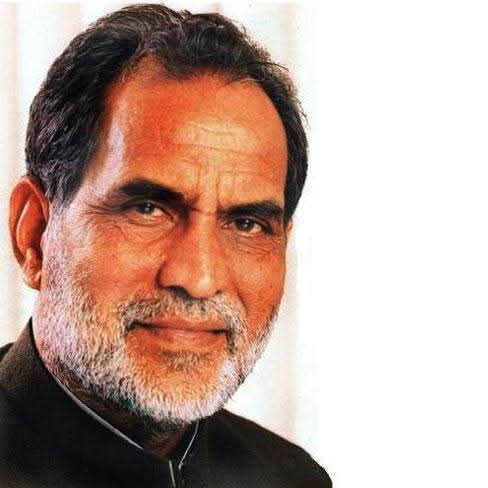
Courtacy: Dynamics of social change by Chandra Shekhar, popular Prakashan , 1978
Discover more from समता मार्ग
Subscribe to get the latest posts sent to your email.