— B. K. Nagla —
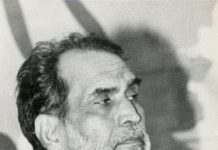
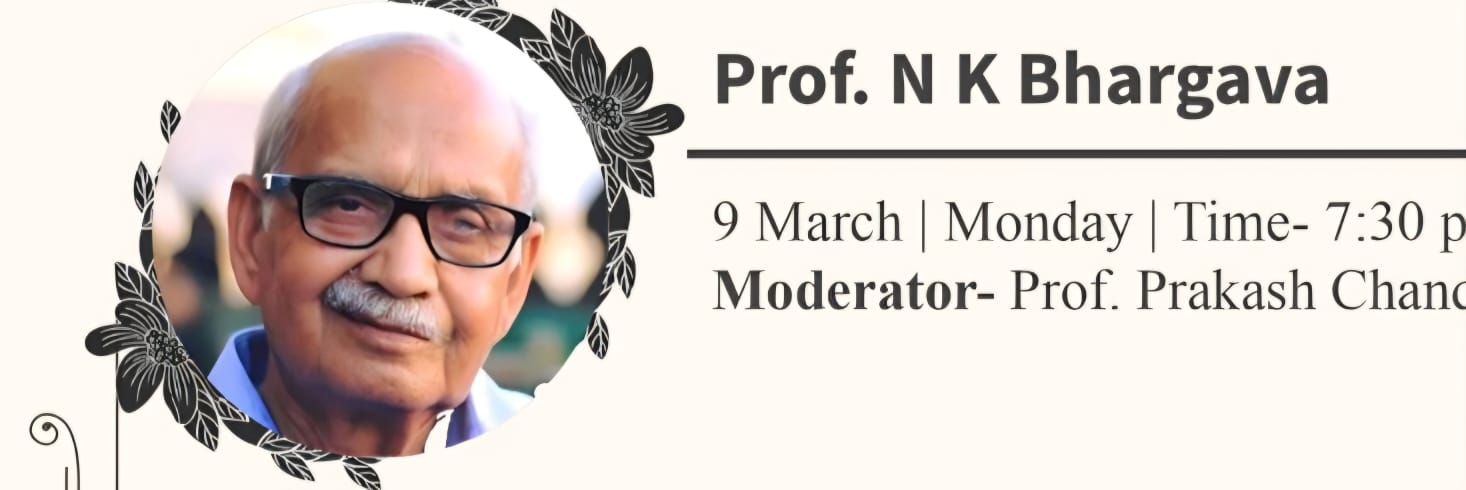
Prof. Naresh Kumar Bhargava passed away on 30 January 2026 at his residence in Udaipur after a prolonged illness. With his passing, Indian sociology has lost not only a distinguished scholar but also a dedicated teacher, institution builder, translator, and public intellectual who devoted his life to the expansion and democratization of sociological knowledge. For several decades, he contributed to the growth of sociology in Rajasthan and beyond through teaching, writing, editing, and active participation in academic institutions. His work bridged the worlds of scholarship and public engagement, leaving a lasting imprint on students, colleagues, and the wider sociological community.
Born on 7 July 1939 in Dholpur, Rajasthan, he was the son of Shri Chandrabhan Bhargava. His academic journey reflected a combination of intellectual determination and deep social rootedness. He received his early education at Town Hall School and Maharaja High School in Dholpur before pursuing higher studies across several institutions. He completed his B.A. from Kishori Raman Degree College, Mathura (Uttar Pradesh), and his M.A. from S. D. College, Beawar (Rajasthan). Later, he obtained an LL.B. from Christian College, Indore, and also studied at Hamidia College, Bhopal. This legal training later enriched his engagement with issues related to the sociology of law.
Prof. Bhargava completed his Ph.D. in Sociology under the supervision of Professor O. P. Sharma at Udaipur University (now Mohanlal Sukhadia University), an institution with which he remained closely associated throughout his academic career.
He married Usha on 24 June 1974 in Jaipur. Mrs. Usha Bhargava passed away on 6 January 2011 after battling cancer. He is survived by his son Mr. Paritosh Bhargava, daughter-in-law Mrs. Indrani, and granddaughter Miss Pankhuri.
For more than three decades, Prof. Bhargava served as Professor of Sociology at Mohanlal Sukhadia University, Udaipur. Earlier in his career, he worked as a lecturer in sociology and as District Programme Director at Pandit Janardan Rai Nagar Rajasthan Vidyapeeth University, Udaipur, as well as with the Department of Tribal Welfare, Government of Madhya Pradesh, Bhopal. Even after his retirement, he remained deeply engaged with academic life—continuing to write, mentor students, attend seminars, and participate in research activities across Rajasthan and beyond.
Intellectual Contributions
Prof. Bhargava’s scholarship covered a wide range of themes including agrarian sociology, feudalism, caste relations, globalization, political sociology, and the social structure of Rajasthan. His work was marked by a careful balance between theoretical reflection and empirically grounded analysis.
One of his notable contributions is the book Vaishvikaran: Samajshastriya Pariprekshya (वैश्वीकरण: समाजशास्त्रीय परिप्रेक्ष्य), which offers a lucid sociological interpretation of globalization and examines its structural, cultural, and economic implications in the Indian context. He also edited Agrarian Structure and Social Transformation, an important volume addressing rural change and agrarian relations. Another edited volume, Social Change and Development, brought together papers presented at the Research Committee on Agrarian Structure and Social Transformation (RC-15) of the Indian Sociological Society. Among his other works is Parivar: Prarambhik Mimansa, which reflects his engagement with sociological questions relating to family and social institutions.
A distinctive aspect of Prof. Bhargava’s intellectual life was his deep commitment to strengthening sociological pedagogy in Hindi. At a time when sociological literature was largely dominated by English, he played a pioneering role in developing accessible yet rigorous teaching material for Hindi-medium students. He edited and contributed to important readers such as Samajshastra: Arth evam Upagam and Samajshastriya Vicharak: Pramukh Pashchatya Vicharak. Through these works, generations of students were introduced to key sociological concepts and classical Western thinkers in a language accessible to them.
He also translated several important sociological writings into Hindi, including works by Gail Omvedt, B. K. Nagla, and Shyamlal Jaidia. These translations significantly expanded the reach of sociological knowledge among Hindi-speaking students and scholars. His commitment to democratizing knowledge was thus not merely rhetorical but institutional and sustained.
Academic Leadership and Institutional Engagement
Prof. Bhargava was deeply involved in the development of sociological institutions and professional associations. He served as Convener of Research Committee-15 (Agrarian Structure and Social Transformation) of the Indian Sociological Society. He was also closely associated with the Rajasthan Sociological Association (RSA), where he served as President and edited the Rajasthan Journal of Sociology for eleven years.
At Mohanlal Sukhadia University, he served as Head of the Department of Sociology and played a key role in strengthening teaching and research activities. He also served as Coordinator for Sociology for the Rajasthan Secondary Education Board and was a member of the International Sociological Association (ISA). In addition, he worked as President of the Janbodh Social and Cultural Research Institute, promoting research, academic dialogue, and intellectual exchange.
Prof. Bhargava had an unmistakable enthusiasm—lalak and utkantha—for seminars and conferences. Whether accompanied by colleagues or students, he attended academic gatherings not merely as a participant but as a lively and stimulating presence. He believed strongly that sociology grows through discussion, debate, and intellectual engagement.
Beyond the Classroom
Prof. Bhargava’s intellectual interests extended far beyond the boundaries of formal academia. When Himmat Seth launched the journal Mahavir Samata Sandesh, he invited Prof. Bhargava to contribute to its inaugural issue. Prof. Bhargava continued writing essays on social and political issues for the journal and later edited special issues devoted to Kahani (short stories) and Vyang (satire).
For many years he also wrote a satirical column titled Kaag Drashti under the pseudonym “Dr. Hamendra Chandaliya.” His identity remained undisclosed until his retirement. Through these writings and cartoons, he demonstrated a rare ability to combine sociological insight with literary and satirical expression.
He also served as a member of the editorial board of Samata Sandesh, editor of the newspaper Dholpur Gazette, and editor of Samaj Vivechan.
His intellectual orientation was deeply influenced by the socialist thought of Acharya Narendra Dev and Ram Manohar Lohia. He believed that a meaningful socialist vision must combine samata (equality) with sampannata (prosperity). The problem of social inequality remained central to his reflections on Indian society.
Teacher and Mentor
Prof. Bhargava was widely admired as a teacher and mentor. Possessing remarkable intellectual agility and an extraordinary memory, he constantly encouraged students to explore new and emerging fields of sociological inquiry. He guided research on diverse themes such as tribal movements, mass communication, sociology of law, and even the sociology of dacoity in the Chambal region—an area he personally visited due to his roots in Dholpur.
He had a rare ability to bring people together and create collaborative academic environments. He organized seminars, youth festivals, literary discussions, and interdisciplinary events exploring the sociology of food, literature, drama, and dance.
An excellent extempore speaker, he had a remarkable command over facts and historical details. He was also deeply fond of music and maintained an extensive collection of books and songs. During field visits with students, he would often analyze film songs sociologically, discussing their lyrics, composers, singers, and cultural meanings.
His scholarly approach was collaborative rather than individualistic. Whenever he began working on a new theme, he would discuss his ideas openly with colleagues and students, incorporating their suggestions and perspectives.
Personal Reminiscences
I had the privilege of knowing Prof. Bhargava for more than forty-five years. Our association deepened through seminars, conferences, and academic visits in Udaipur and at Maharshi Dayanand University, Rohtak. On several occasions he visited our department along with distinguished sociologists such as Prof. S. L. Doshi and Prof. P. C. Joshi to participate in national seminars.
When I was editing the Indian Sociological Society’s Hindi journal Bhartiya Samajshastra Sameeksha, he served as Book Review Editor with great dedication and precision. At my request, he also edited a volume on contextual social issues based on articles published in the journal.
He contributed a chapter on peasant and farmers’ movements in India for the IGNOU series on Land Reforms and Rural Development, which I edited. He also translated my book on Indian Sociological Thought into Hindi, thereby making it accessible to a wider readership.
During my recent visit to Udaipur (29 November to 1 December 2025), I went with Prof. P. C. Jain to see him at Paras Hospital, where his daughter-in-law Mrs. Indrani was taking care of him. She mentioned that he was not paying sufficient attention to his meals, as he remained deeply absorbed in new academic projects—a book on Dholpur and another documenting sixty years of the Sociology Department at Sukhadia University, which he was editing with Prof. Mohan Advani. Even at that stage of illness, his intellectual curiosity remained undiminished.
In every interaction I found him simple, disciplined, and deeply humane. He believed that no person is inherently bad and that circumstances shape human conduct. His mentorship was patient, ethical, and generous.
Legacy
Prof. Naresh Kumar Bhargava’s life represents a rare synthesis of scholarship, pedagogy, and social commitment. Through his writings, translations, editorial initiatives, and institutional leadership, he contributed significantly to the development of sociology in India, particularly by strengthening sociological scholarship in Hindi and expanding its accessibility to wider audiences.
He was a scholar, translator, editor, teacher, thinker, satirist, and above all a humane and generous mentor. Those who knew him remember not only his intellectual clarity but also his simplicity, warmth, and deep ethical conviction. Indian sociology has lost a valued colleague, yet his intellectual legacy will continue to inspire generations of students and scholars.
His life reminds us that sociology is not merely an academic discipline; it is a lifelong commitment to understanding society and working towards a more just and equitable social order. In that sense, Prof. Bhargava’s voice and vision will continue to resonate within the discipline he served with such dedication.
Selected Bibliography of Prof. Naresh Kumar Bhargava
Books and Edited Volumes
Bhargava, Naresh Kumar. Vaishvikaran: Samajshastriya Pariprekshya (वैश्वीकरण: समाजशास्त्रीय परिप्रेक्ष्य). Jaipur: Rawat Publications.
Bhargava, Naresh Kumar (Ed.). Agrarian Structure and Social Transformation. Jaipur: Rawat Publications.
Bhargava, Naresh Kumar (Ed.). Social Change and Development. Papers presented in RC-15, Indian Sociological Society.
Bhargava, Naresh Kumar. Parivar: Prarambhik Mimansa.
Bhargava, Naresh Kumar (Ed.). Samajshastra: Arth evam Upagam.
Bhargava, Naresh Kumar (Ed.). Samajshastriya Vicharak: Pramukh Pashchatya Vicharak.
Translations
Omvedt, Gail. Selected writings translated into Hindi by Naresh Kumar Bhargava.
Nagla, B. K. Indian Sociological Thought (Hindi translation by Naresh Kumar Bhargava).
Jaidia, Shyamlal. Selected sociological writings translated into Hindi by Naresh Kumar Bhargava.
Editorial Contributions
Editor, Rajasthan Journal of Sociology (Rajasthan Sociological Association).
Editorial Board Member, Samata Sandesh.
Editor, Dholpur Gazette.
Editor, Samaj Vivechan.
Discover more from समता मार्ग
Subscribe to get the latest posts sent to your email.