There is something I have in common with Manoj Menon, Bureau Chief of Mathrubhumi in Delhi. My connection with that position began long before he assumed it, when I landed in Delhi in 1973 as a young journalist trying to find my feet in the capital.
The then bureau chief, V.K. Madhavan Kutty, was among my early benefactors. Almost every day, I would spend a few minutes at his office in the Indian and Eastern Newspaper Society building on Rafi Marg. I went there primarily to read Malayalam newspapers that I could not otherwise afford.
Mr. Kutty would receive me with an affectionate smile and, if it happened to be tea time, I would invariably be offered a glass of tea. Those gestures may appear insignificant today, but for a struggling journalist they conveyed warmth, encouragement and a sense of belonging.
Years later, after he joined Asianet, I persuaded him to chair a jury that we constituted at Deepalaya to select a journalist who had done the best reporting or written the best article on child rights. Happily, he also helped us raise the prize money of Rs 25,000, a considerable amount in those days.
The first recipient of the award was K.R. Meera, who has since become one of Malayalam’s most celebrated writers. The following year, the award went to Ramya Kannan of The Hindu. Unfortunately, the response from journalists was not adequate thereafter, and we reluctantly discontinued the award.
To return to Manoj Menon, one complaint I occasionally hear about my writing is that it tends to be long-winding. What many critics do not realise is that I follow word limits with almost mathematical precision. I write editorials for an English newspaper. The stipulated limit is 460 words, including the headline. It is never 461 or 459.
Let me admit, mine is essentially armchair journalism. I cannot travel as much as I would like to, meet people in different walks of life or absorb insights directly from the field. I compensate for these limitations by reading extensively—newspapers, journals, books, memoirs and reports.
Menon possesses a quality that I admire immensely: he goes deep into a subject and travels extensively for this purpose. Recently, he interviewed Mathrubhumi’s photographer P.G. Unnikrishnan who retired last month. Many of us who had known Unnikrishnan for decades were unaware of several facets of his life and personality until we watched that interview. In a single conversation, Menon brought out the photographer’s many-sided talents, struggles and experiences.
I have also read his page-after-page-long interviews with political leaders such as Amit Shah and editors like Arun Shourie. Menon has a remarkable knack for recalling incidents from the past and connecting them with contemporary developments. While reading him, one gets a palpable sense of place and time, almost as though one is transported to the scene where events unfolded.
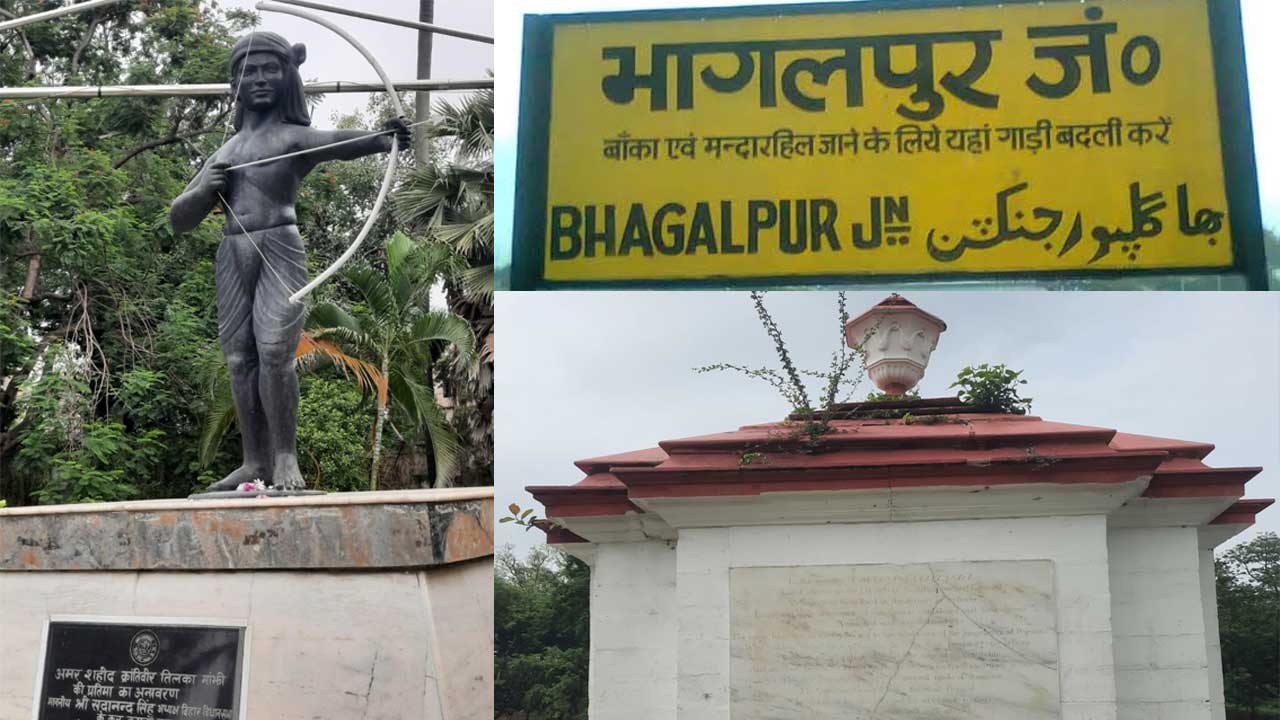
What triggered these reflections was a series of articles Menon wrote recently on the Bhagalpur blinding case. The case remains one of the darkest chapters in independent India’s criminal justice history. In 1980, the police in Bhagalpur, Bihar, blinded dozens of undertrial prisoners by pouring acid or corrosive chemicals into their eyes after piercing them with needles.
The victims, many of whom had not even been convicted, were accused of being hardened criminals. The barbarity shocked the nation and prompted outrage from civil liberties groups, the judiciary and sections of the media.
The Supreme Court later intervened, and the case became an important milestone in the evolution of human rights jurisprudence in India. Yet, despite judicial pronouncements and promises of compensation, many victims continued to live in abject poverty, dependent on meagre assistance that often never reached them regularly.
When I joined The Searchlight in Patna in 1980, the Bhagalpur blinding case was very much in the news. I had occasions to write editorials on it. I had a young colleague, Ashok Sinha, who was an ardent admirer of Arun Sinha of the Indian Express. Arun Sinha’s bylines were familiar to me, but Ashok treated him as though he were a combination of Bob Woodward and Carl Bernstein rolled into one.
The two achieved worldwide fame in the 1970s through their relentless investigation of the Watergate scandal. Their reporting in The Washington Post exposed illegal activities linked to the administration of President Richard Nixon, ultimately leading to his resignation in 1974, the first and only resignation by an American President.
For generations of journalists, they symbolised the power of investigative reporting to hold authority accountable.
At that stage in my career, I had my own journalistic heroes. G.K. Reddy of The Hindu captivated me with his masterly command of the English language. T.V. Parasuram inspired me with his international reporting. P.K. Krupakaran of the Indian Express and Sam Rajappa of The Statesman set standards in state-level political coverage, while O.V. Vijayan demonstrated how cartoons could become instruments of political commentary.
Had he been elder to me, I might even have placed Arun Sinha among the finest investigative journalists.
Menon has, through his series, brought the Bhagalpur blinding case back to life by interviewing almost everyone associated with it, especially S.N.M. Abdi, the journalist who actually scooped the story.
Of course, he did not write about an editor who had competed with his own reporter to take credit for a story he had not reported. Possessing the authority to rewrite a copy and insert his own byline, he apparently presented himself as the principal author while relegating the reporter to the role of a mere collector of facts.
I must confess that in Patna I once or twice rewrote stories filed by colleagues and placed my byline first, alongside that of the reporter. It did not take me long to realise that such a practice was ethically questionable. Journalism, like any other profession, depends upon fairness and recognition of individual effort.
I was deeply saddened to learn through Menon’s articles that many victims of the blinding tragedy never truly received justice. Even the monthly compensation of Rs 750 remains elusive for some of the few survivors who are still alive.
A few years after the blinding episode, I visited Bhagalpur when communal riots had devastated the town. Some of the atrocities committed then were even more horrifying than blinding. Tragically, many who applauded the police for blinding the alleged criminals later became participants in, or silent spectators to, even greater acts of inhumanity. Today, blinding may not be common, but lynching has emerged as a disturbingly familiar manifestation of mob cruelty.
Reading Menon’s painstaking reconstruction of those events filled me with horror, not merely at what happened in Bhagalpur 46 years ago, but at the ease with which societies can normalise brutality when victims are dehumanised.
Journalism, at its best, serves as a collective conscience, rescuing forgotten stories from oblivion and forcing us to confront uncomfortable truths.
For reminding us that injustice does not fade with time and that memory itself can be an act of resistance, Manoj Menon deserves our gratitude. His enterprise, persistence and fidelity to the human dimension of history exemplify the kind of journalism that remains indispensable in any democracy worthy of the name.
Discover more from समता मार्ग
Subscribe to get the latest posts sent to your email.