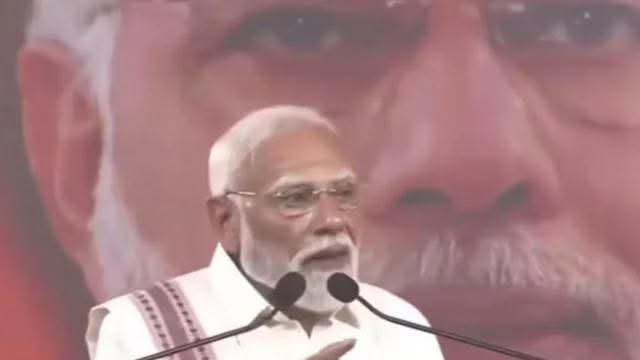
Narendra Modi is celebrating his twelfth year as Prime Minister. He too has turned out to be a ‘strong leader’ like Indira Gandhi – a destroyer of consensus and collective decision making. A brand rather than a visionary, and an intolerant and capricious leader.
Politics expert Archie Brown, who first alerted Prime Minister Margaret Thatcher to the existence and potential significance of a reform-minded future Soviet leader called Mikhail Gorbachev, challenges the widespread belief that strong leaders – those who dominate their colleagues and the policy-making process – are the most successful and admirable. Within democracies, although ‘strong leaders’ are seldom as strong or independent as they purport to be, the idea that one and the same person is entitled to take all the big decisions is, he argues, dangerous nonsense.
A more collegial leadership is too often dismissed as weakness and its advantages overlooked. Within authoritarian regimes, a more collective leadership is a lesser evil compared with personal dictatorship, where cultivation of the myth of the strong leader is often a prelude to oppression and carnage.
In reality, Brown contends, only a minority of political leaders make a big difference, by challenging assumptions about the politically possible or setting in motion systemic change. Franklin D. Roosevelt and Lyndon B. Johnson, Willy Brandt and Mikhail Gorbachev, Deng Xiaoping and Nelson Mandela, Margaret Thatcher and Tony Blair are among the leaders Brown has examined in his wide-ranging book – THE MYTH OF A STRONG LEADER. Archie Brown’s The Myth of the Strong Leader was published by Bodley Head
Archie Brown is emeritus professor of politics at Oxford University. His previous books include “The Gorbachev Factor and The Rise and Fall of Communism”.
Voters may yearn for ‘strong’ leaders but they can be calamitous for democracy. Archie Brown explains why India’s new prime minister, who has a reputation for intolerance, needs to adopt a softly-softly approach. This article was published in The SUNDAY TIMES on May 25, 2014. I doubt of Narendra Modi any anyone in his circle of advisors or cabinet team will read. Maybe they already have a good idea of what is now needed, but I think it is unlikely.
PUMPING IRON WONT BUILD A BETTER INDIA, MR.MODI, BUT A HANDSHAKE WILL.
When Narendra Modi is sworn in as India’s prime minister tomorrow, he has a real chance to make a difference. Not all heads of governments spearhead fundamental change, but the extent of the victory of his BJP Hindu nationalist party and the scale of the problems of Indian society provide great opportunities — and raise dangers. What matters is that Modi does not become a Mohamed Morsi, with Hindu intolerance substituting for Muslim intransigence in Egypt.
When Hosni Mubarak, the strongman who led Egypt for three decades, was overthrown, there were high hopes that his country would become a democracy. The presidential election that followed the 2011 revolution offered a restricted choice which, understandably, was not to the liking of many who had taken to the streets to demand the removal of Mubarak. The alternatives on offer were the candidate of the Muslim Brotherhood — Morsi — or Mubarak’s last prime minister, Ahmed Shafiq.
Elected by a narrow majority, Morsi pushed through partisan changes rather than pursuing inclusionary policies. A new constitution was adopted that was supported by only 32% of voters. Morsi’s winner-takes-all approach ended with the forcible overthrow of his government, his imprisonment and military rule.
We are now on the eve of the Egyptian election to choose Morsi’s successor. All the indications are that the new president will be the former army chief Abdul Fattah al-Sisi. He was a leading figure behind what was in essence a military coup against the Muslim Brotherhood, albeit a coup that attracted some liberal support. Nothing suggests Sisi will be any more inclined than his predecessor to oversee the building of democracy. The false god of the strongman has again prevailed over aspirations for political freedom and social justice.
Morsi led an intolerant religious movement that, in power, was insensitive to those who did not share its values and that quickly generated widespread discontent. The tragedy is that mistakes are being repeated with the killing of protesters and the banning of the Brotherhood, which was Egypt’s largest social movement.
Although India has had decades of experience of democracy, which Egypt lacks, there are some dangerous possible parallels. Modi’s BJP was the first party to win an overall majority in India for a generation, but it did so with the support of only 31% of the vote. In that multicultural state, in which secularism is constitutionally embedded, and support for democracy is high, an attempt to impose a Hindu ascendancy over all other religious groups, and over more than 160m Muslims specifically, would be a recipe for disaster.
Modi has in the past shown insensitivity at best and intolerance at worst in his attitudes towards India’s large Muslim minority. Yet in the recent election almost 10% of the Muslim vote went to the BJP, even though the party fielded only a handful of Muslim candidates. For the minority of Indian Muslims who took that plunge, this was a triumph of hope for economic and social improvement over fear of religious bigotry. Modi’s promise to put “toilets before temples” — to extend sanitation to the hundreds of millions deprived of it — resonated with the poor, while his pro-business credentials appealed to many of the beneficiaries of India’s economic growth.
Along with the support for democracy in Indian society — including, crucially, a competitive party system — there is also, however, some hankering for a “strong leader” who will assert his authority both at home and abroad. It will be harder in India, with its great cultural, religious and social diversity, to rule autocratically than in Egypt, and it would be unwise of Modi to try.
At first glance, a “strong leader” looks appealing. Much to be preferred, surely, to a weak leader. Yet why should we deem it desirable for one person to have the last and definitive word on everything? Whether we look at the Middle East or at a majority of the successor states to the Soviet Union, we find a proliferation of overbearing leaders who have certainly been strong in the sense of getting their way and dominating the political landscape, but who have been huge obstacles to the building and maintenance of democratic institutions.
The former Soviet Union offers a somewhat less bleak picture than the Arab world, although among the 15 Soviet successor states, few have as vibrant a democracy as India. The most consolidated post-Soviet democracies are those of Estonia, Latvia and Lithuania, but a majority of the countries are either unambiguously authoritarian or, as in the case of Russia, hybrid regimes that have become increasingly intolerant of political opposition and media dissent.
The first president of the Russian Federation, Boris Yeltsin, in spite of his championing of democracy in the last years of the Soviet Union, did more harm than good to that cause during his years in the Kremlin. The man he anointed as his successor, Vladimir Putin, is still more obviously smitten by nostalgia for the authoritarian past (although comparisons to Hitler or Stalin are far-fetched). Parliament is now almost as obedient as was the old, unreformed Supreme Soviet, and the state-controlled television gives no airtime to critics of the president, according him and his acolytes an extended platform to extol the Kremlin’s achievements in a manner more than a little reminiscent of the pre-perestroika Soviet Union.
If a country is to make a successful transition to democracy, this involves much more than taking measures that may be popular at the time (as, for example, Russia’s reincorporation of the Crimean peninsula, which has raised still higher Putin’s already buoyant domestic approval ratings). It means embedding democratic institutions, encouraging rather than stifling party competition, and adhering to a rule of law administered by an independent judiciary. The values of the top leadership collectively and of the head of the government specifically in a country embarking on transition from authoritarian rule, whether the latter was communist, fascist or a military dictatorship, can make a decisive difference to the outcome.
The strong-weak distinction is not the best measure of good leadership anywhere and especially not in a country where there are people who have had a bellyful of authoritarianism and want to be treated as citizens with rights that can be defended politically and legally rather than as subjects at the mercy of arbitrary rule. Thus, a leader’s integrity, his commitment to democratic norms, acceptance of limits on his powers, inclusiveness, tolerance and collegiality matter much more than “strength” if there is to be hope of consolidating democracy.
An excellent example, although one little followed either in the Middle East or in the former Soviet Union, was set by a politician who died in March at the age of 81. This was the former Spanish prime minister, Adolfo Suarez, who oversaw Spain’s successful transition to democracy when he led the government from 1976-81. He would be an excellent example for Modi.
Just as Modi’s political style raises doubts about how democratic and inclusionary his leadership will be, so Suarez, who had been a high-level official in the Franco regime, was not initially seen as a natural democrat. Yet Suarez’s consensus-building approach as prime minister was of crucial importance in bridging apparently irreconcilable differences. He gave priority to establishing a good working relationship with the communist leader, Santiago Carrillo, a veteran of the Spanish Civil War. Suarez took the risk of legalising the Communist party, which was anathema to conservative forces and could easily have led to a military coup.
Through patient negotiation, he won the support of the communists and the Socialists, led by Felipe Gonzalez, for a constitutional monarchy. His policy led to a new constitution, endorsed by almost 90% of the population.
By the time a serious coup attempt was mounted in 1981, Spanish democracy was sufficiently resilient to survive. And at that moment the constitutional monarchy demonstrated its usefulness, for rebellious military officers who had little respect for party politicians obeyed King Juan Carlos when, wearing his uniform of captain general, the highest military rank, he appeared on television and announced that he would not tolerate this attempt to interrupt the democratic process.
Wise leadership — as demonstrated by Suarez and as embodied by a much more internationally renowned inclusionary leader, Nelson Mandela — is vastly preferable to overweening leadership. Let’s hope that Modi will be less blinkered than Morsi.
Discover more from समता मार्ग
Subscribe to get the latest posts sent to your email.