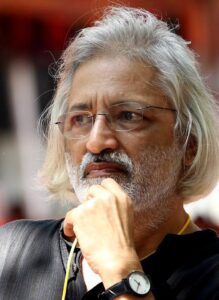
— Anand Patwardhan —
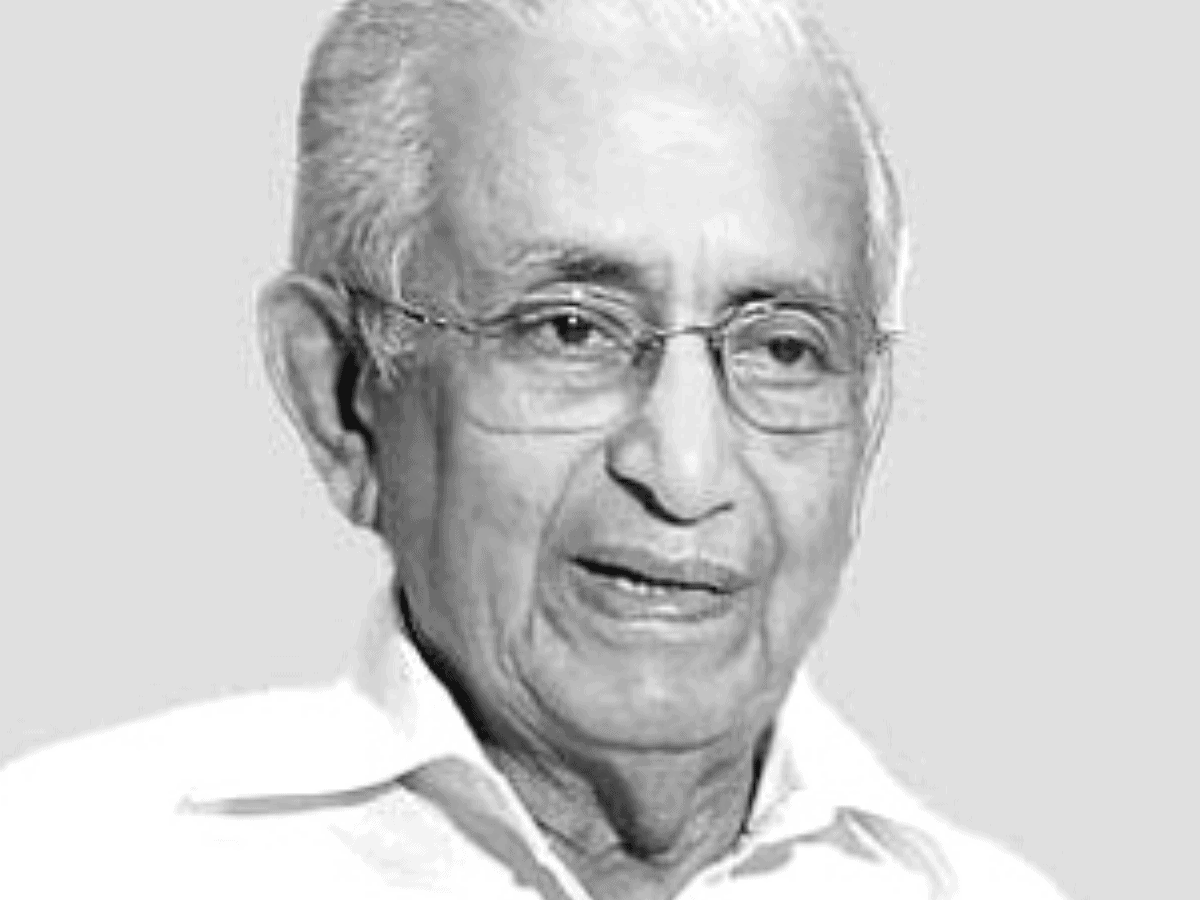
When Irfan bhai rang up to tell me that I had been nominated for the Asghar Ali Engineer Memorial Lifetime Achievement Award, I was deeply honored but I hesitated because I know so many activists in India who deserve this award much more than I do. What finally made me accept was the regard I have for the person whose memory this award celebrates.
Dr. Asghar Ali was not just one of India’s leading fighters for communal harmony, an Islamic scholar and a revolutionary reformist in his own community, to me and all the young acolytes that gathered around him, he was also a wise and approachable teacher. He had the enviable ability to appear docile while being a true radical in the best sense of the term. Perhaps the greatest compliment was that he was attacked by both Hindu as well as Muslim fundamentalists.
I won’t ramble on to people who know better than I do about who Dr. Engineer was and what he was able to do despite all the life-threatening attacks he faced in his lifetime. His work lives on long after him and is visible here today.
Let me then speak about what we all face today. This is an India that perhaps even Dr. Asghar Ali would not have imagined could come to pass. He had responded magnificently to the post-Babri violence of 1992-93. Under his leadership we had formed Ekta to build communal harmony and we marched through the city and small towns that had been badly affected by riots. But the India of 1992-93 is a far cry from the India of today. Back then communal forces were still building their narrative and their shrill message did not always fall on receptive ears. They did not yet have a complete grip on State power. Mainstream media was not in their pocket. Social media and smart phones had not yet arrived and fake news was not easy to peddle. Money power had not gravitated to a single party, the courts had not collectively lost their backbone and elections had a paper trail that could not easily be electronically fixed. Yes the Gujarat pogrom occurred in 2002, the top leadership escaped punishment and post 9/11, the bogey of Islamic jihad gripped the imagination of the Western world, and of course, India.
The Babri demolition campaign in 1990 had already set the narrative for inter-communal hatred and violence. The post-Godhra “riots” of 2002 and a series of bomb blasts and encounters across the country culminated in the 26/11 Mumbai attack. Many of these, in my view, a view that is based on considerable research, were cynically designed to prove that Muslim terror was growing exponentially. Not surprisingly the RSS reaped the benefit and eventually rose to near absolute power.
I do not mean to imply that violence and hatred from minority religious groups did not, and does not exist. Indeed it usually takes two hands to clap and the rising insecurity amongst minorities can indeed provoke a reaction which is often exactly what the original perpetrator wants.
The real question before us is, and let me first clarify who I mean by “us”. I do not refer to Hindus, Muslims, Christians, Sikhs or Buddhists. I am not even talking of the caste hierarchy that has divided us for centuries. By us, I mean all those who have not yet lost the ability to think freely. We who see ourselves as human beings first and foremost, at a time when the very planet we live upon is undergoing catastrophic changes brought on by war and greed. We are family and we have to protect and nurture each other. I will not say more as I am not a speaker or writer, as much as a documenter of our times so I prefer to speak through my films.
In closing I want to say that no matter how great Dr. Asghar Ali Engineer was, real greatness is being able to inspire a team that can carry forward a legacy into the future. So I must thank Irfan Engineer, Dr. Ram Punyani and all the team gathered here, both those who are visible and those who work tirelessly, outside the limelight.
Discover more from समता मार्ग
Subscribe to get the latest posts sent to your email.