— Dr. Suresh Khairnar —
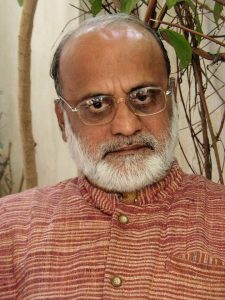
The evening of 18 July has brought another sad piece of news for the socialist movement. Our hero of the 1970s, Dr. Kumar Saptarshi, is no longer with us.
Dr. Kumar Saptarshi was born on 21 August 1941 in Khed village of Karjat taluka in Ahmednagar district. His father was a government doctor, which is why he was born there. After completing his early education in the village school, he continued his studies up to a BSc in Ahmednagar and then took admission to BJ Medical College, Pune.
Due to his impressive personality, he served as a monitor in school and was later elected as a student representative in the student parliament at college. Because of these leadership qualities, visible from his early days, he always appeared full of confidence.
However, because of the continued work of Mahatma Jyotiba Phule’s Satyashodhak Samaj in Maharashtra even after his death, and the resulting Brahmin vs. non-Brahmin tensions, he could enter parliamentary politics only briefly. After spending half his life in active public life, he got the opportunity to become a member of the Maharashtra Legislative Assembly for a short period during the brief Janata Party era.
But fundamentally, like Dr. Ram Manohar Lohia, Dr. Kumar Saptarshi was always experimenting with new ideas and concepts. In Maharashtra during that period, along with a few close associates, he created quite a stir through various movements, though these were largely limited to Pune, Mumbai, and Marathwada. At that time, all major newspapers were published from Mumbai and Pune. Because of this, even students like us studying in faraway Vidarbha would immediately come to know about the activities carried out by Kumar Saptarshi and his colleagues in Mumbai and Pune through those newspapers. In contrast, news of our own movements and activities remained confined only to the local newspapers of our region.
We would often discuss among ourselves that even a small dharna, protest, or meeting of just ten people in Pune or Mumbai would get published the next day in the newspapers with photographs. Similarly, Kumar, who was nearly six feet tall, fair-complexioned, with an attractive personality and dressed in a khadi pyjama-kurta, always looked dignified. He was brimming with self-confidence and equally talented. He could impress anyone at first sight.
I met him for the first time in 1967 at Baba Amte’s first Shram Sanskar Shibir (work camp). I was around 13 or 14 years old at the time, while Kumar was significantly older than me—of marriageable age. His future wife, Urmila Saptarshi, had also come to the camp with him (they were dating before marriage). In those days, this was quite unusual in Maharashtra, so we watched this couple with great curiosity.
Kumar insisted on speaking to everyone as equals. He said, “I like talking to everyone on equal terms. So even if you are younger than me, don’t call me ‘Kumar’ or ‘aap’ (formal ‘you’). Speak to me using ‘tu’ (informal ‘you’).” This was another cultural shock for me, as I was not used to addressing elders so informally. But Kumar’s insistence on equality was almost like a mission. I tried to follow it for many days. However, in recent years, seeing his advanced age, I had started addressing him respectfully as “Doctor” or “aap.”
His personality was such that he could easily have gone into theatre or cinema. But in the 1970s, while studying at BJ Medical College in Pune, he started study circles with his classmates. Discussions on local as well as global issues were regularly held in various colleges of higher education. I too had started one at Amravati Medical College. Similar study circles were active in Pune, Mumbai, Nagpur, Aurangabad, and even at the IITs.
The decade from the 1970s to the 1980s was a period of extraordinary energy for students like us. Around the same time, due to the disintegration of the Republican Party after Dr. Babasaheb Ambedkar’s Mahaparinirvan in 1956 and the compromising attitude of those in power, there was great anger among Dalit youth. Inspired by the Black Panther movement in America against racist policies, the Dalit Panther revolutionary organization was founded. Shortly before that, some Marxist youths, disillusioned with the established Left parties, had formed a transformative Left group called “Magowa” and also published a Marathi magazine by the same name. Some of them had launched a movement in Shahada taluka of Dhule district to restore land grabbed by powerful Patel landlords from Adivasis.
Dr. Kumar Saptarshi did not limit himself to running study circles at Pune Medical College. Very soon, in 1967, he founded the Youth Revolutionary Front (Yuvak Kranti Dal) with his associates. Through this organization, he successfully led innovative movements against rising prices, capitation fees in private medical colleges, and issues at Rahuri Agricultural University.
Later, in the 1970s, when some upper-caste youth in Gujarat and Maharashtra started agitations against reservations, Dr. Kumar Saptarshi organized counter-movements in support of reservations, including one at Aurangabad’s Jantar Mantar-like site. I also participated in it on behalf of the Rashtra Seva Dal.
In the 1990s, during the movement to rename Marathwada University after Dr. Babasaheb Ambedkar on his birth centenary, Dr. Kumar Saptarshi played a very important role. He had also made a well-publicized attempt to publicly debate the Shankaracharya on the issue of the Manusmriti in Pune.
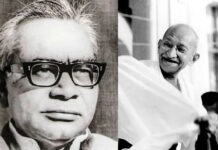
We were very good friends. Whenever we met, we would talk through the night. Ideologically, Dr. Kumar Saptarshi was deeply committed to democratic socialism. Apart from Dr. Ram Manohar Lohia, Jayaprakash Narayan, Pune socialist leader S.M. Joshi, Nanasaheb Gore, Madhu Limaye, and George Fernandes, he did not consider anyone else a leader. Because of this stubbornness, he largely kept himself isolated in his political life.
I had tried to persuade him many times: “All leaders have their own strengths and weaknesses, but they are all socialists. What will you gain by criticizing them and earning their displeasure? They have worked for so many years, and that is why they are in the second line of leadership today. You should learn to adjust to them, give them due respect, and work together.
Your habit of addressing everyone informally creates unnecessary resentment. Look at how the leaders you respect speak to the next generation of leaders. You are not learning from that. I have known you since the 1970s as a friend and well-wisher. I want the socialist movement to benefit from your talent and abilities. But by criticizing the leadership of the Rashtra Seva Dal and the Socialist Party, you are shooting yourself in the foot. You are full of leadership ambition, but you must win a place in their hearts for them to accept you as a leader. Mahatma Gandhi had a deep influence on your life. So think about how Gandhi was able to lead and command the respect of such diverse personalities as Nehru (father and son), Sardar Patel, Chakravarti Rajagopalachari, Maulana Abul Kalam Azad, Dr. Ram Manohar Lohia, Jayaprakash Narayan, and others. If we too accept Mahatma Gandhi, then understanding how he built such deep internal relationships with everyone will help you become a respected leader among socialists.”
Red Salute to the Revolutionary Dr. Kumar Saptarshi.
Discover more from समता मार्ग
Subscribe to get the latest posts sent to your email.