On Day 14 of the Supreme Court hearing over the entry of women into the Sabarimala temple, senior advocate Menaka Guruswamy invoked Dr B. R. Ambedkar’s views during the constituent assembly debates to reason why it was essential to allow women’s entry into the major Hindu pilgrimage site in Kerala’s Pathanamthitta district, dedicated to Lord
Ayyappan.
Guruswamy was assisting the 9-judge bench in the context of legal interpretation of the
constitutional provisions while appearing in an application filed by late social activist
Swami Agnivesh.
Initially, she referred to the rationale underlying Articles 15, 16, 17 and 25 permitting State
intervention, which she said was rooted in India’s social history, in which temples and
religious institutions historically excluded classes of Hindus, warranting constitutional
measures to ensure inclusion.
Article 15 Prohibition of discrimination on grounds of religion, race, caste, sex or
place of birth.
Article 16 Equality of opportunity in matters of public employment.
Article 17 Abolition of untouchability.
Article 25 Freedom of conscience and free profession, practice and propagation of
religion.
Guruswamy said between 1946 and 1950, while the Constituent Assembly was engaged in
framing the Constitution, independent India was simultaneously undertaking a
comprehensive codification and reform of Hindu personal laws.
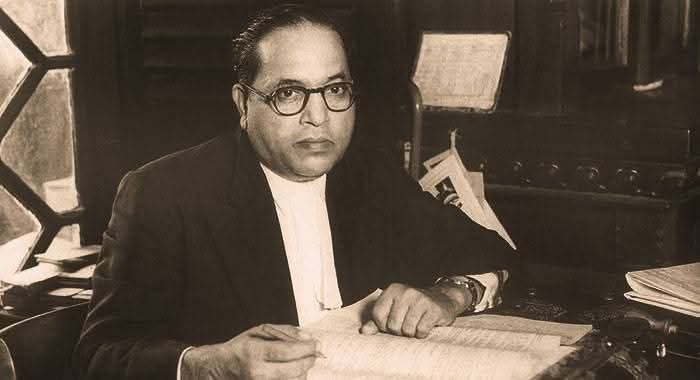
Quoting Dr B R Ambedkar from his debates on the Hindu Code Bill on the necessity of
reforming Hindu laws, despite the views of the majority, she said, “Sir, much has been
made of the fact that there is a great deal of public opinion which is opposed to this Bill. I
have certainly not weighed the opinions that we have received, but I do like to say this, that
this is hardly a question that we can decide by counting heads. This is not a question which
we can decide in accordance with the opinion of the majority.”
Guruswamy continued, “When society is in a transitory stage, leaving the past, going to the
future, there are bound to be opposing considerations: one pulling towards the past and
one pulling towards the future, and the test that we can apply is no other than the test of
one’s conscience. I have not the slightest doubt in my mind that the provisions of this Bill
are in perfect consonance with the conscience of the community, and I have therefore, no
hesitation in putting forth this measure although it may be as a matter of fact that a large
majority of our countrymen do not accept it.”
During the process of codification, significant opposition was stated to have been raised on
grounds of religious sanctity against several reformative measures, including the abolition
of caste-based restrictions as a condition for a valid marriage, the prescription of
monogamy, and the inclusion of a right to divorce.
Despite the resistance, the Parliament was said to have enacted the Hindu Marriage Act,
1955, the Hindu Succession Act, 1956, Hindu Adoptions and Maintenance Act, 1956. These
enactments were not isolated legislative exercises; rather, they reflected the same
constitutional philosophy that was contained in Part III of the Constitution.
‘Reformative ethos’
The lawyer referred to the “reformative ethos of religion and Hinduism”, as reflected in the
language of Article 25 of the Constitution, which goes to show that the drafters gave pre-
eminence to the right to “freedom of conscience” and hence placed it before the right to
freely profess, practice and propagate religion.
While talking of discriminatory practices in the light of faith and suggesting ways to
“enhance faith” in terms of numbers, she said, “One way is through propagation, the other
way is through emancipation, that is also how you increase your numbers. And I think the
Constitution was wise to this.”
Guruswamy further felt it right to mention that any constitutional hearing must start with
a reference to Dr Ambedkar.
“Usually, when I argue Constitution cases, I cite him in the constituent assembly, but today I want to cite him for the man that he was, because prior to the constituent assembly, there was also a man who had a lifetime of experience of experiencing caste,” she said.
Dr Ambedkar, speaking of temple entry, was not allowed entry into the Puri Temple in July
1945, added Guruswamy. The lawyer was referring to a time period of a little under a year before the Constitution was complete.
“Dr B R Ambedkar was not allowed entry into the Puri Temple in July 1945 owing to his
caste but Lord Mountbatten, who was accompanied by Dr B R Ambedkar, was accorded a
red carpet reception by the Jagannath temple,” the plea argued by Guruswamy states.
The plea quoted a few lines on the incident from his biography as saying, “He explained
how the Congress campaign for the removal of untouchability had proved an utter failure
and cited how during his recent visit he could have only a distant view of the famous
Jagannath temple at Puri from the terrace of a neighbouring house.”
The Constitution and post-independence Hindu reform legislations were said to be
“sympatico” in their underlying objective — the expansion of participation, inclusion, and equal access within Hindu society.
“A religion may expand in two ways—through propagation of its faith and through internal
reform that enables the inclusion of those historically excluded from its fold. The
architecture of our Constitution has only expanded the constituency of Hinduism, and
today, if Hindu Women are kept out of temples, then the same would whittle down the
intent of the Constitution and also inhibit the growth of Hinduism,” Guruswamy said in her
submissions.
Discover more from समता मार्ग
Subscribe to get the latest posts sent to your email.